
 Español
  Français
  Deutsch
  Italiano
  Nederlands
  International
Before an embryo transfer: What do you need to do? How can you prepare for the day of the transfer?
If your embryo transfer is coming up, you’re probably wondering what you can do to ensure you’re calm and well prepared before an embryo transfer.
For many patients, this moment marks the end of a long journey involving fertility tests, medication, check-ups, decisions and waiting.
That is why, together with Dr Marta Zermiani, we at Vida Fertility have put together this guide containing key advice and recommendations ahead of an embryo transfer, so that you can refer to the instructions whenever you need to.


- 1. What does an embryo transfer involve?
- 2. How is an embryo transfer carried out?
- 3. How to prepare for an embryo transfer
- 4. Progesterone prior to embryo transfer
- 5. The day of the embryo transfer: what to eat, what to wear…
- 6. Frequently asked questions from patients before the transfer
- 6.1. Can I take any medication before the embryo transfer?
- 6.2. Do I need to rest before the embryo transfer?
- 6.3. Can I eat anything I like before the embryo transfer?
- 6.4. Does an embryo transfer hurt?
- 6.5. Is it okay to have sex before an embryo transfer?
- 6.6. What if I forget to take a dose of progesterone?
- 7. Recommendations before the transfer
- 8. Our fertility treatments
- 9. The best fertility clinics in Spain
What does an embryo transfer involve?
Embryo transfer is the moment when the embryo is placed inside the uterus, after it has been developed to the blastocyst stage in the assisted reproduction laboratory following treatment involving in vitro fertilisation, egg donation, the ROPA method or embryo adoption.
Although it is a very emotionally significant day for the patient, from a medical point of view it is usually a straightforward procedure. In most cases, it takes around 15–20 minutes, does not require anaesthesia and is not usually painful if access to the cervix is normal.
How is an embryo transfer carried out?
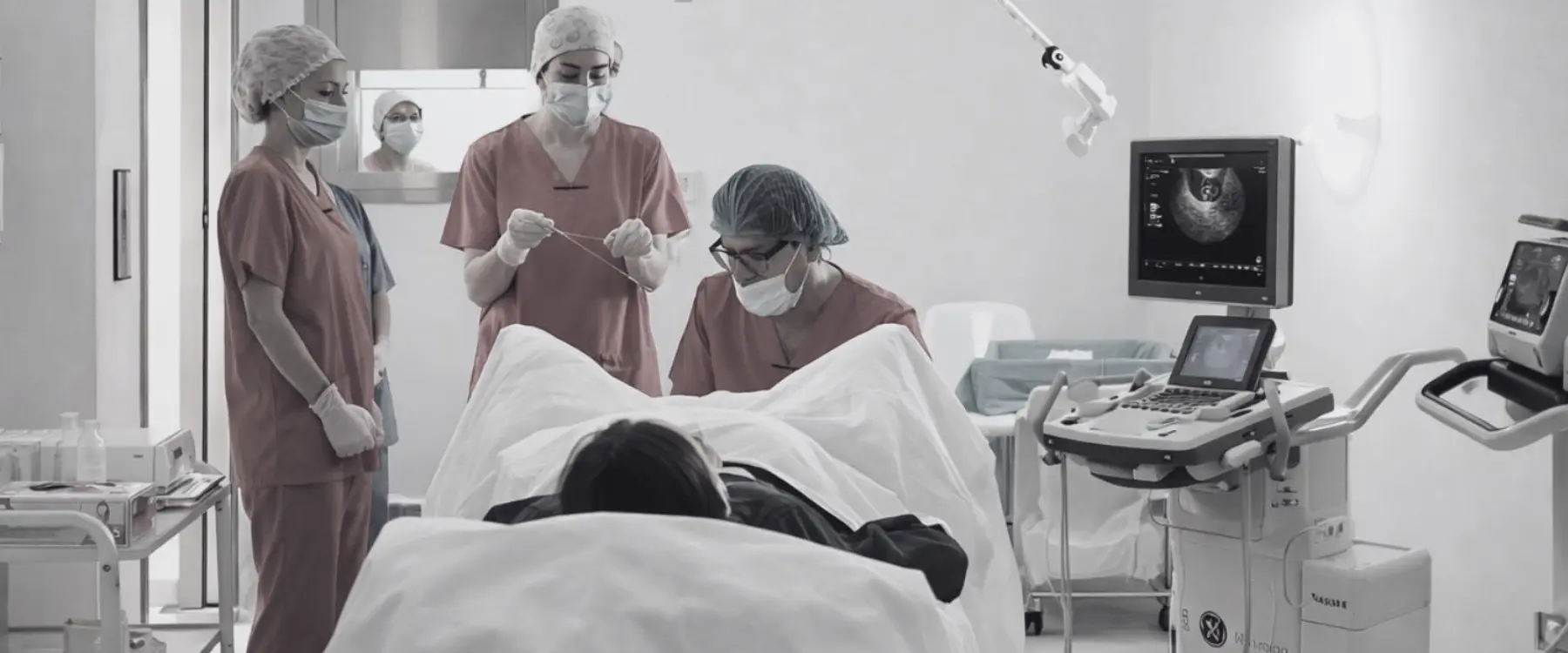
During the procedure, the medical team first inserts a very fine catheter through the cervix. This catheter clears the way so that the embryo can be placed precisely inside the uterine cavity. The embryo is then loaded onto another very delicate catheter and carefully deposited into the uterus.
A step-by-step guide to embryo transfer
- A simple procedure lasting around 15–20 minutes
- No anaesthesia is required if access to the cervix is optimal
- A very fine catheter is used to create a pathway for the catheter carrying the embryo
- Guided by transvaginal or abdominal ultrasound*
*The entire process is guided by ultrasound, which may be abdominal or transvaginal depending on the individual case and the centre’s protocol.
Once the transfer has been carried out, the embryo does not depend on you remaining still for hours. This is one of the questions we hear most often in consultations. The uterus is not an open cavity: it is an organ with walls that are in contact with one another, and the embryo is placed in the position indicated by the medical team.
How to prepare for an embryo transfer
Medical instructions: medication, timings and dosages
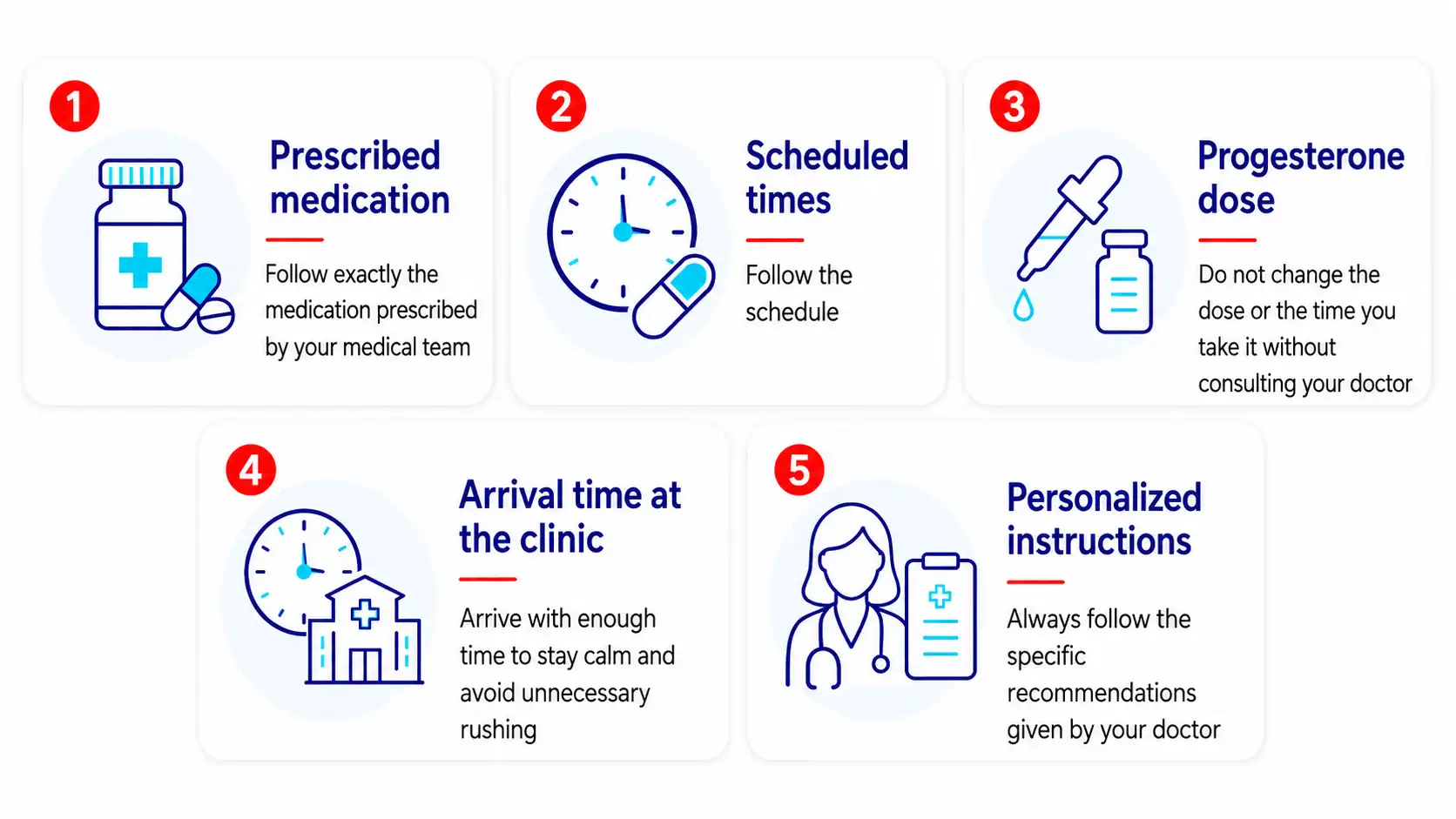
The first piece of advice is to follow the treatment plan prescribed by your medical team exactly as directed. This includes:
- Taking your hormonal medication
- Sticking to the timetable
- Taking the correct doses of progesterone
- Following any personalised instructions you have been given.
In assisted reproduction treatments, even small changes to the timetable can make a significant difference, particularly when it comes to progesterone.
What should you eat before an embryo transfer?
It is also advisable to maintain a balanced diet in the days leading up to the event. There is no need to follow a special diet or impose extreme restrictions (unless you have any allergies or intolerances), in which case you should follow a strict diet.
The best approach is to prioritise thoroughly washed vegetables, fruit, high-quality protein, pulses, whole grains, olive oil, nuts and plenty of fluids.
What should you avoid before an embryo transfer?
On the other hand, it is best to avoid foods that are also not recommended at the start of pregnancy: undercooked meat, raw fish, unpasteurised fresh cheeses, soft cheeses such as Brie if they are not properly pasteurised, raw or undercooked eggs, and poorly washed fruit or vegetables.
The aim is to reduce the risk of foodborne infections at a stage when we want to act as if the pregnancy had already begun.
Lifestyle prior to embryo transfer
As regards alcohol and tobacco, these should be avoided. There is no known safe amount of alcohol to consume during pregnancy or whilst trying to conceive; therefore, drinking alcohol is strongly discouraged. Furthermore, we would like to highlight the risks associated with smoking during pregnancy.
Progesterone prior to embryo transfer
Progesterone is a hormone that is essential for preparing the endometrium and ensuring it is receptive to embryo implantation.
In assisted reproduction treatments, it is used to support the luteal phase, particularly in hormone-supplemented cycles or frozen embryo transfers.
Progesterone is key to the success of the transfer, as it helps to ensure the endometrium is synchronised with the embryo. The timing of commencement and the route of administration are very important, as serum levels can influence the outcome of treatment.
This synchronisation is what we call the implantation window. That is why it is so important to start vaginal, subcutaneous or combined progesterone treatment exactly on the day and at the time specified in your medical instructions.
At Vida Fertility, we can also monitor blood progesterone levels when the treatment protocol requires it. Not all patients absorb the medication in the same way. Insufficient absorption can compromise the condition of the endometrium, which is why personalised medical monitoring is so important.
Tips for taking vaginal progesterone correctly
If your healthcare team has prescribed vaginal progesterone, such as Utrogestan or another formulation, it is very important that you follow the prescribed dose and schedule exactly. At this stage of treatment, progesterone helps to prepare the endometrium and maintain the right conditions for implantation, so you should not change the regimen on your own.
We recommend that you go to the toilet before inserting the vaginal pessaries or capsules. This prevents you from having to get up straight afterwards and helps you feel more comfortable.
Wash your hands thoroughly and insert the medication into your vagina as deeply as you can, without causing yourself any harm. Afterwards, if possible, lie down for about 15 minutes.
Vaginal progesterone is absorbed quickly, although it is normal to notice whitish or oily traces on your underwear afterwards. This does not mean you have lost all the medication. It is common for some of the excipient to be discharged.
As a practical tip, avoid taking a bath immediately after administration. Ideally, wait about two hours before having a bath or immersing yourself in water. Showering is not usually a problem, but if you have any doubts about your specific situation, always check with your healthcare team.
During this time, it may be helpful to use a panty liner, as vaginal progesterone can increase discharge or leave small traces. Knowing that this is normal helps you to stay calm and avoids unnecessary worries.
The day of the embryo transfer: what to eat, what to wear…
Wear comfortable clothes that are easy to take off and put on. There’s no need to dress up or wear perfume, make-up or nail varnish. The important thing is that you feel comfortable and relaxed.
On the day of the embryo transfer, it is not usually necessary to fast, unless your medical team has told you otherwise. You can have a light, balanced breakfast. Avoid very heavy meals that might cause discomfort, bloating or nausea.
Arrive in good time. One of the things that causes the most anxiety is feeling that you’re running late. Setting off with plenty of time to spare, avoiding rushing and knowing where the clinic is located really helps you to approach the day with greater peace of mind.
When you enter the room, the team will explain each step to you. You’re not alone. We know that this moment can stir up many emotions: excitement, fear, hope and doubts. Our advice is to breathe, listen to the instructions and let the medical team guide you through the process.
Frequently asked questions from patients before the transfer
Dr Marta Zermiani, Director of Clinical Operations at Vida Fertility Madrid, replies:
Can I take any medication before the embryo transfer?
Not all medicines are suitable at this stage. Some may be contraindicated during pregnancy or may interfere with your fertility treatment.
Before taking any medicine that is not included in your treatment plan, always consult your medical team. This includes anti-inflammatories, painkillers, digestive medicines, antihistamines, antibiotics, natural products and supplements.
At Vida Fertility, we prefer patients to clarify any concerns they may have before making any changes on their own. If you have a headache, digestive discomfort, a cold, a fever or any other symptoms before the day of the transfer, please let the team know so that we can advise you on what to do.
Do I need to rest before the embryo transfer?
It is not necessary to rest completely before an embryo transfer. In fact, it is advisable to maintain a calm, normal lifestyle, avoiding excessive exertion and high-impact activities.
You can go for a walk, go out for a stroll, work if your job does not involve significant physical exertion, and do activities that help you feel good. However, it is not advisable to start intense training, lift heavy weights or take part in sports where there is a risk of falling.
It is also important to make sure you get enough rest. A good night’s sleep does not guarantee implantation, but it does help you approach the procedure with less physical and emotional stress. Anxiety before the transfer is very common; it does not mean you are doing anything wrong. Try to organise the day before calmly: lay out your clothes, check the time of your appointment, work out the journey time and confirm that you have the necessary medication.
Can I eat anything I like before the embryo transfer?
Yes, unless you have any allergies or intolerances. It is best to follow a balanced diet, rich in vegetables, and avoid very heavy meals that might cause discomfort, bloating or nausea, especially on the day of the transfer.
Does an embryo transfer hurt?
Generally speaking, no. It may feel a little uncomfortable, similar to a gynaecological examination, but it is not usually painful. If access to the cervix is more difficult or if there is a specific condition, the medical team will explain this to you.
Embryo transfer is usually carried out without anaesthesia or sedation, unless specifically indicated by a doctor.
Is it okay to have sex before an embryo transfer?
Although some specialists may advise against having sexual intercourse prior to an embryo transfer at Vida Fertility, we believe it is important to treat each case on an individual basis.
There are few rigorous scientific studies on this subject and, consequently, there is little scientific evidence.
In general, sexual intercourse is usually prohibited in most clinics following an embryo transfer. There are several reasons for this: infections, pain during intercourse, and another reason is that, in many cases, if the beta test is negative, feelings of guilt are directed towards the partner, which is extremely damaging in a fertility treatment process.
What if I forget to take a dose of progesterone?
Do not take a double dose unless advised by your doctor. If you miss a dose, please contact the Vida Fertility team so they can advise you on what to do, depending on your treatment plan, the time you missed the dose and the type of transfer.
If you miss a dose of progesterone, it is particularly important to do so before the transfer, as the start time of progesterone treatment determines the timing of the transfer. Please do not try to manage this on your own. We are here to support you, especially at times like these.
Recommendations before the transfer
Embryo transfer is a brief, delicate and very important procedure within fertility treatment. To ensure you are well prepared, please bear the following points in mind:
- Take your medication exactly as prescribed
- Do not change your usual routine
- Look after your diet
- Avoid alcohol and tobacco
- Consult your doctor before taking any medication
- Pay particular attention to progesterone.
At Vida Fertility, we know that this day is not just ‘a formality’ for you. It is a deeply meaningful moment. That is why we have created this guide: to provide you with a clear, practical and reliable resource to refer to whenever you need it in the run-up to your transfer.
If you’re preparing for an embryo transfer or have any questions about your fertility treatment, book an appointment with the Vida Fertility team. Dr Marta and our medical team can review your case, explain each step and support you with a personalised plan so that you can go through this process with the utmost confidence.





Vida Fertility Events
At Vida Fertility, we believe that feeling informed is the first step towards a more confident fertility journey.
Through our events, talks and private consultations, we help patients understand their options, ask questions and receive personalised guidance from our fertility specialists in Spain.
Discover our upcoming events and meet the Vida Fertility team.
Ask for a consultation
You may also like




Last news


Testimonials







The best fertility clinics in Spain

📍 C/ Palermo 15, Hortaleza, 28043 Madrid
📞 Phone number: +34 919 29 83 23
🕒 Opening hours: Monday to Friday from 8am to 7pm
📍 Av. Óscar Esplá 1, Bajo, 03008 Alicante
📞 Phone number: +34 919 29 83 23
🕒 Opening hours: Monday to Friday from 8am to 7pm
ℹ️ The information published on Vida Fertility is reviewed by our fertility specialists and medical team, following up-to-date scientific criteria and evidence-based medicine. Our team is a member at scientific societies such as SEF, ESHRE and SEGO.