
 Español
  Français
  Deutsch
  Italiano
  Nederlands
  International
Requirements for egg donor in Spain: a medical guide and step-by-step guide

In order to donate eggs in Spain, you must meet a number of medical and legal requirements. Generally speaking, donors must be aged between 18 and 34*, be in good physical and mental health and have no genetic or infectious diseases.
Furthermore, egg donation is anonymous and altruistic, although compensation is provided for the inconvenience caused by the process. Before being accepted, each candidate must undergo a comprehensive assessment that includes a gynaecological examination, blood tests, genetic testing and a psychological evaluation, with the aim of ensuring the donor’s safety and the quality of the eggs.
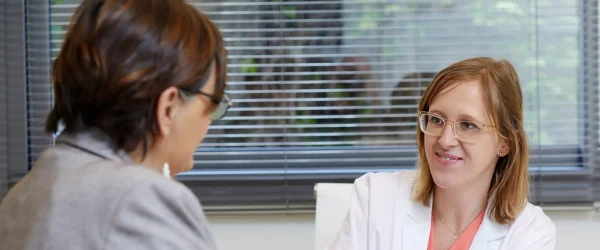
We spoke to Dr Marta Zermiani, about the requirements for egg donation, the fertility tests we carry out on prospective donors, how to donate eggs and what the law says in Spain.


- 1. Requirements for donating eggs
- 2. What does the law say in Spain? Anonymity, compensation and limits on the number of children
- 3. What is SIRHA?
- 4. The donating eggs process (step by step)
- 5. Frequently asked questions about the requirements for egg donation
- 6. Donating eggs at Vida Fertility
- 7. Best clinics for egg donation in Spain
Requirements for donating eggs
In practice, donation programmes consider four key factors:
- Suitable age (usually 18–30/35 depending on the clinic*).
- Good physical and emotional health
- Family history
- Normal medical and psychological test results (blood tests, STIs, genetic screening, ultrasound and psychological assessment).
From here, let’s take it step by step
What is the age range for egg donation?
Up to what age can you donate? You’ll find different age ranges depending on the fertility clinic, for example, 18–30 or 18–34.
This is because, although the law sets out the framework for donation, each clinic defines its own medical criteria to maximise safety and egg quality. In practice, many centres accept donors from the age of majority and set an upper limit of around 34 years.
BMI and fertility
Another requirement is to have an appropriate Body Mass Index (BMI), which is the ratio of height to weight, as well as good physical and mental health.
Although this point often causes controversy, at Vida Fertility we aim to minimise risks during stimulation, sedation and recovery.
Donation must be safe for you first and foremost.
Family history
We aim to minimise the risk of passing on genetic conditions and ensure the donation programme is as safe as possible.
For this reason, some clinics state that they need to know your medical history regarding first- and second-degree relatives, to rule out the presence of genetic conditions in your family that could increase the risk of passing on such conditions.
Tattoos
No problem. You can be an egg donor even if you have tattoos. We’ll assess when they were done and check for any infections.
Use of contraceptives
Can you donate if you’re taking contraceptives or using an IUD? Yes, you can donate; at the clinic, we’ll advise you on how to stop using them during the treatment cycle.
Medical and psychological tests before egg donation
Before you start, the process includes interviews and tests to confirm that everything is safe:
- Psychological assessment to ensure you’re ready and that your decision is voluntary and well-considered.
- Gynaecological examination and ultrasound scan to assess your ovaries and gynaecological health.
- Blood tests and screening for infections/STIs, such as HIV, hepatitis, etc.
- Genetic/chromosomal tests; through blood tests, we can detect over 600 genetic conditions.
- Karyotype, to assess the condition of your chromosomes.
- Informed consent, explaining the procedure and possible effects.
At Vida Fertility, you will need to undergo these medical tests and psychological assessments to confirm that you are in good health and that the process can be carried out in complete safety for you.
According to Dr Marta Zermini, “We take our work and the responsibility involved in every treatment very seriously. That is why not all women who wish to be donors ultimately become so. We carry out a rigorous selection process, with exhaustive medical and psychological assessments, to ensure the donor’s safety and the highest quality in every assisted reproduction treatment.”
What does the law say in Spain? Anonymity, compensation and limits on the number of children
The legal framework governing egg donation in Spain is set out in Law 14/2006 on Assisted Human Reproduction Techniques. This law on donation in Spain stipulates that:
- Egg donation is anonymous, voluntary, altruistic and confidential; neither the donor nor the recipient will know each other’s identity.
- The process is strictly regulated and monitored by the Ministry of Health through the SIRHA.
- Only authorised centres such as Vida Fertility may carry out these treatments.
- The donor’s identity is anonymous and cannot be disclosed, not even to the recipient or the future child.
- Each donor may only contribute to the birth of a maximum of six live children on Spanish territory.
- Phenotypic and immunological matching is carried out based on medical criteria and phenotypic compatibility (physical similarity).
- There are national registers and traceability systems that guarantee safety and legal oversight.
Spanish law protects the donor, the recipient and the future baby. It is a legal framework that ensures safety, ethical standards and transparency.
What is SIRHA?
SIRHA, the Ministry of Health’s Assisted Human Reproduction Information System, is a key tool for ensuring safety in fertility treatments in Spain.
Thanks to this system, each donor is assigned a unique code, which allows them to be identified at any clinic whilst maintaining their anonymity. Furthermore, it ensures full traceability of gametes and embryos, from donation through to their use.
It also enables compliance with the law to be monitored – such as the maximum limit of six children born per donor – and allows the activities of assisted reproduction centres to be recorded. All of this is carried out in accordance with strict criteria of confidentiality and data protection.
In summary, SIRHA provides an additional safeguard for patients and donors, as it ensures that the entire process is carried out with the utmost rigour, safety and health oversight.
The donating eggs process (step by step)
How does donating eggs work? In this article, we explain the stages of egg donation:
Interview and admission to the programme
At Vida Fertility, the process begins with an initial consultation during which our team conducts a personalised interview to find out about your medical history and your general state of health.
During this visit, we explain clearly and in detail what egg donation involves, answer all your questions and support you in making an informed decision, with no obligation whatsoever.
If you decide to proceed, we will open your medical file, carry out the initial assessments and proceed with the signing of the necessary consent forms to begin the process in complete safety.
Tests to become an egg donor
To ensure everything is safe, we carry out:
- Psychological assessment
- Gynaecological examination and ultrasound scan
- Blood tests and screening for infections/STIs
- Genetic/chromosomal tests
- Karyotype
Ovarian stimulation
Once we have the test results, and provided all values are within the required range, we begin ovarian stimulation, which lasts around 10–12 days. Hormonal medication is administered and regular checks are carried out to monitor how the ovaries are responding.
Ovarian puncture
Following stimulation, we proceed to retrieve the eggs, a procedure known as ovarian puncture or follicular puncture. This is a procedure carried out in the operating theatre under sedation and takes around 20 minutes.
Once our team has confirmed that everything is in order, after approximately 2 hours of recovery, the doctors will discharge you.
At Vida Fertility, we have over 15 years’ experience carrying out this type of procedure, following strict medical protocols that guarantee maximum safety and effectiveness. Ovarian puncture is carried out under sedation and always by a highly specialised team, ensuring the well-being and health of our patients at all times.
Follow-up
After the egg retrieval, we’ll check in with you to make sure you’re doing well and to answer any questions you may have. In fact, if you have any further questions about egg donation, please feel free to get in touch.
Frequently asked questions about the requirements for egg donation
Who can be a donor?
Dr Marta Zermiani replies:
Generally speaking, a woman aged between 18 and 35 who is in good physical and emotional health and successfully passes the required medical and psychological assessments can be a donor. At Vida Fertility, we assess each case individually to ensure that the donation can be carried out safely for both the donor and the recipient patients.
What documentation do I need?
Dr Marta Zermiani replies:
At Vida Fertility, we require a valid national identity card or passport.
Is egg donation painful?
Dr Marta Zermiani replies:
Donating eggs is not painful as the follicular puncture is carried out under sedation. Symptoms that may occur after the puncture include mild discomfort and swelling, which are explained during the consultation and monitored through follow-up appointments.
Will the recipient know who I am?
Dr Marta Zermiani replies:
No. In Spain, donation is anonymous and confidentiality is protected. Under the law on egg donation, egg donation is anonymous, voluntary, altruistic and confidential; neither the donor nor the recipient will know each other’s identity.
Donating eggs at Vida Fertility
If you’ve read this far, it’s probably not just out of curiosity. You’re likely considering donating eggs.
At Vida Fertility, we offer high-quality reproductive medicine, cutting-edge technology and personalised support to make you feel confident every step of the way.
If you’d like, the next step is simple: book an information session at Vida Fertility and we’ll have a chat, with no obligation.
Ask for a consultation
You may also like




Last news


Testimonials




Best clinics for egg donation in Spain

📍 C/ Palermo 15, Hortaleza, 28043 Madrid
📞 Phone number: +34 919 29 83 23
🕒 Opening hours: Monday to Friday from 8am to 7pm
📍 Av. Óscar Esplá 1, Bajo, 03008 Alicante
📞 Phone number: +34 919 29 83 23
🕒 Opening hours: Monday to Friday from 8am to 7pm
ℹ️ The information published on Vida Fertility is reviewed by our fertility specialists and medical team, following up-to-date scientific criteria and evidence-based medicine. Our team is a member at scientific societies such as SEF, ESHRE and SEGO.