
 Español
  Français
  Deutsch
  Italiano
  Nederlands
  International
At Vida Fertility, we’ve put together this guide so you have the most important guidelines to hand before your transfer.
Tips for preparing for an embryo transfer
How to prepare yourself before the transfer
At Vida Fertility, we’ve put together this guide so you have the most important guidelines to hand before your transfer.
The most important things to remember before your embryo transfer
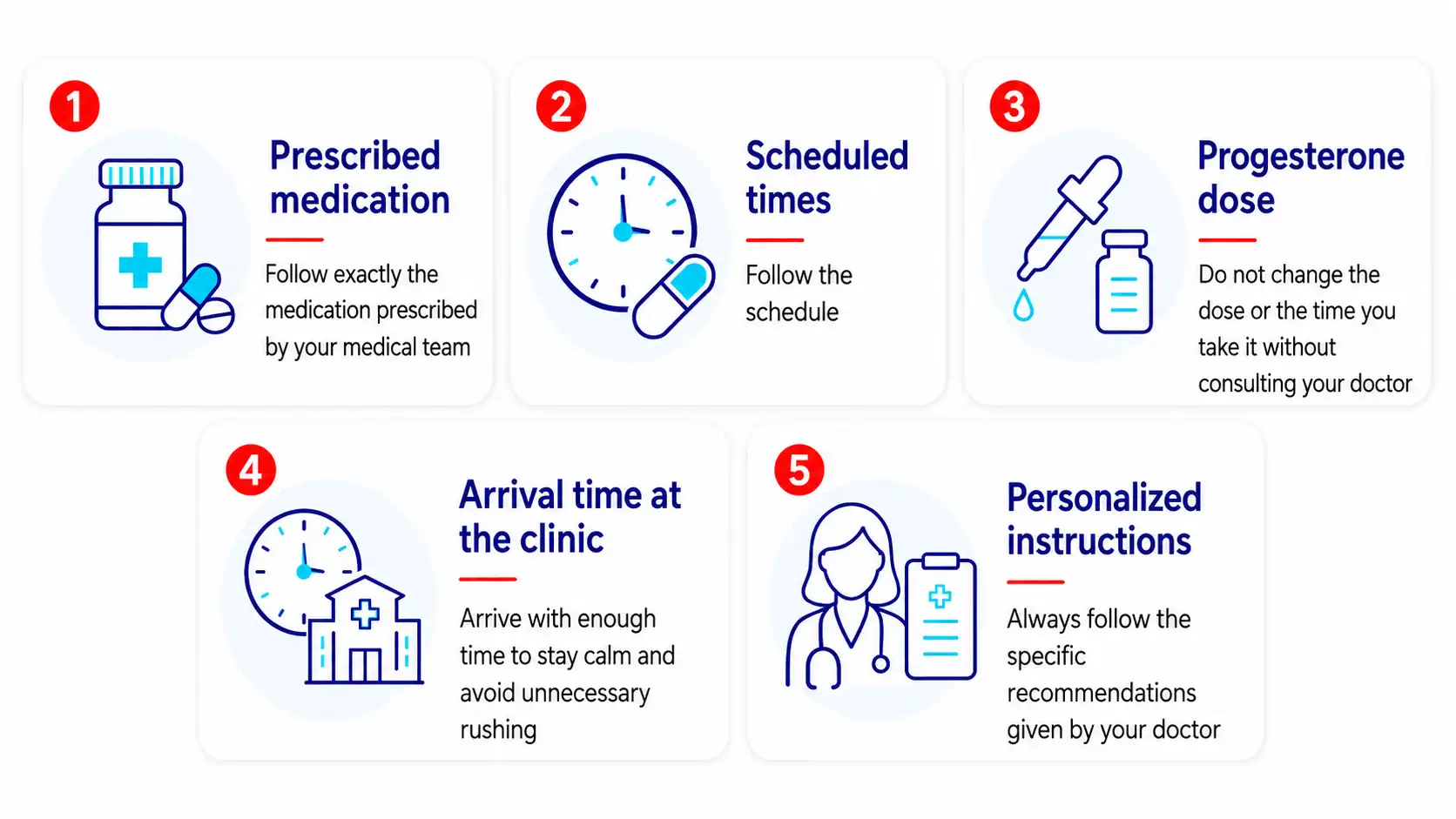
Before the embryo transfer, the most important thing is to follow your medical team’s instructions exactly.
If your treatment includes aspirin (Adiro) or heparin (INNOHEP, Clexane, etc.), you must not take it on the day of the transfer; you can resume taking it the following day.
The importance of progesterone before embryo transfer
Progesterone is a key hormone prior to an embryo transfer because it helps prepare the endometrium and maintain the right conditions for implantation.
The endometrium must be synchronised with the embryo. This synchronization is known as the implantation window. This is why it is so important to start taking your progesterone exactly on the day and at the time specified in your medical instructions.
At Vida Fertility, we closely monitor your blood progesterone levels.Because this hormone is so vital, ensuring proper absorption helps us maximize the chances of a successful embryo transfer.


How to take vaginal progesterone correctly
If you have been prescribed vaginal progesterone, such as Utrogestan or another formulation, always follow the prescribed dose and schedule.
Practical advice:
- Empty your bladder before inserting the progesterone.
- Wash your hands thoroughly.
- Insert the medication into your vagina as deeply as comfortable.
- If possible, lie down for about 15 minutes afterward.
- Do not worry if you see traces of the medication on your underwear.
- You can use a panty liner for extra comfort.
- Avoid immersing yourself in water immediately after. As a guide, wait about two hours before taking a bath or swimming.
It is completely normal to notice whitish or oily discharge. This is just the capsule casing (excipient) leaving your body, and it does not mean you have lost the medication.
Step by step of an embryo transfer
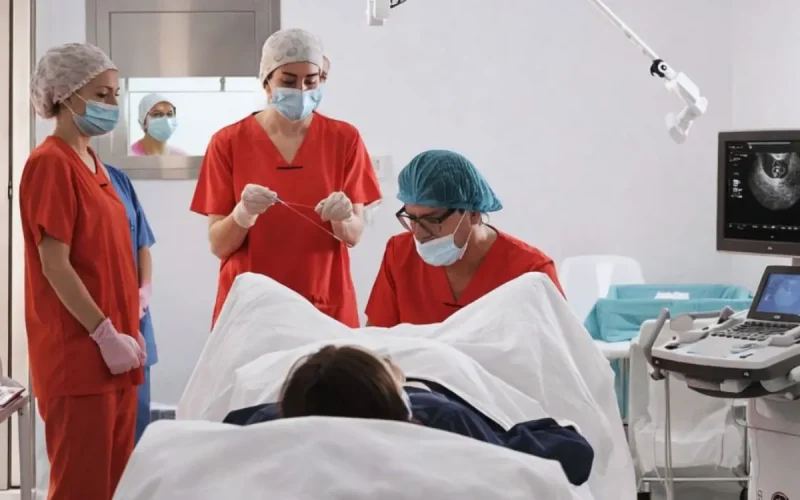
An embryo transfer is the procedure in which the embryo is gently placed inside the uterus.
Although it is a very emotional day, from a medical standpoint, it is a straightforward, routine procedure. It normally takes around 15–20 minutes, does not require anesthesia, and is typically painless if access to the cervix is normal.
During the transfer:
- First, a very fine, flexible outer catheter is guided through the cervix.
- This catheter prepares a smooth path for the embryo.
- The embryo is then loaded into an even more delicate inner catheter.
- The embryo is carefully placed inside the uterus.
- The entire procedure is monitored in real-time using transvaginal or abdominal ultrasound, as appropriate.
Once the transfer is complete, the embryo rests safely in the precise location chosen by your medical team.

How to prepare for an embryo transfer
The best way to prepare for an embryo transfer is to follow your doctor’s instructions carefully. You don’t need to do anything out of the ordinary. You don’t need to change your routine.
Diet before an embryo transfer
You do not need to follow a special diet before your transfer, unless your medical team has given you specific instructions due to allergies, intolerances, or other medical conditions. On the day of the transfer, we recommend a light breakfast or lunch. Avoid heavy, high-fat meals or anything that might cause bloating, nausea, or discomfort.
What to eat before your embryo transfer?
We recommend eating a balanced meal that includes:
- Thoroughly washed vegetables.
- High-quality protein.
- Whole grains.
- Healthy fats like olive oil.
- Plenty of water throughout the day: remember to stay well-hydrated.
Foods to avoid before your transfer
For your safety, we recommend avoiding foods that are typically restricted during pregnancy:
- Undercooked meat
- Raw fish or seafood
- Unpasteurised cheeses
- Raw or undercooked eggs
- Unwashed fruits or vegetables.
The goal is to minimize any risk of foodborne illness, as it is best to act as if your pregnancy has already begun.
Lifestyle before your embryo transfer
Alcohol and tobacco should be completely avoided. There is no known safe amount of alcohol during pregnancy or while trying to conceive; therefore, drinking is strongly discouraged. Furthermore, smoking can significantly impact your treatment outcomes and poses serious risks to a developing pregnancy, so we highly recommend quitting or pausing entirely during this time.
The day of the embryo transfer
- Arrive ahead of time.
- Wear loose, comfortable clothing.
- Avoid perfumes, makeup, and nail polish.
- Bring your medication if you need to take it while away from home.
- Follow the instructions for a full bladder if advised to do so.
- Do not fast unless specifically instructed by your doctor.
- Ask any remaining questions before your procedure begins.
Always follow the specific instructions given by your medical team.
FAQ before an embryo transfer
Do not take any new medication without first consulting your medical team. This includes:
Anti-inflammatories.
Painkillers.
Antibiotics.
Antihistamines.
Digestive medicines.
Supplements.
Natural products.
Some medications may be contraindicated or interfere with your treatment at this stage.
It is not necessary to stay on complete bed rest before your embryo transfer.
You can maintain a gentle, normal routine. Feel free to go for walks, continue working if your job does not involve heavy physical exertion, and participate in low-impact activities that help you feel relaxed.
However, please avoid intense exercise, heavy lifting, high-impact sports, or any activities with a risk of falling.
There are no special preparations required. The most important things you can do are to maintain healthy habits, get plenty of rest, eat a balanced diet, and closely follow your hormone regimen – paying special attention to your progesterone.
To ensure everything goes smoothly, please avoid rushing to your appointment, do not alter your medication or take unauthorized products, avoid excessive exertion, and remember to inform us immediately of any issues, such as a missed progesterone dose, a fever, or feeling unwell.
- Avoid overexertion, keep your physical and mental activity light and gentle throughout the day (no sport activities, avoid carrying and/or lifting heavy loads).
- Avoid sexual intercourse at least until the pregnancy test.
- Avoid immersion in water (baths, swimming pools, dry and wet saunas, spas, etc.).
- You can resume most normal daily activities: working, walking, and using public transport are perfectly safe, provided they do not involve intense physical exertion.
Generally speaking, no. The procedure is very similar to a routine gynecological examination and does not require anesthesia or sedation. However, we always care for each patient based on their individual needs.
- Please note that experiencing mild lower abdominal pain is normal due to the hormone treatment.
- Similarly, if you notice light bleeding or spotting, this is very common and usually not a cause for concern. However, if you experience heavy bleeding or have any worries, please contact us right away.
- Lastly, if you need to take any other medication during this time, always consult us first to ensure it is safe for your treatment and a potential pregnancy.
We are here for you every step of the way
The embryo transfer is one of the most significant milestones in your journey. At Vida Fertility, we want you to feel completely informed, calm, and supported as this day approaches.
If you have any questions about your preparation, your progesterone schedule, or any other medical guidance, please do not hesitate to reach out to your Vida Fertility team. We are here to help you take this next step with absolute confidence and peace of mind.


Who should I contact if I need help preparing for the embryo transfer?
Fertility clinic in Madrid

Fertility clinic in Alicante
