
 Español
  Français
  Deutsch
  Italiano
  Nederlands
  International
IVF with PGT-A: the key treatment for successful family formation

Many of our patients are unaware that one of the main factors in negative IVF is the presence of chromosomal abnormalities in the embryos.
According to the most recent data from the Spanish Fertility Society (SEF), the probability of achieving a pregnancy through In Vitro Fertilisation (IVF) increases significantly when the embryos are genetically analysed before transfer. This is reflected in the National Registry of Activity 2022, which confirms that embryo selection by PGT-A improves success rates in assisted reproduction treatments.
In this article, we talk to Dr. Marta Zermiani about why IVF with PGT-A may be the key to successful assisted reproduction treatment and family formation.


What is IVF with PGT-A and why is it key in assisted reproduction?
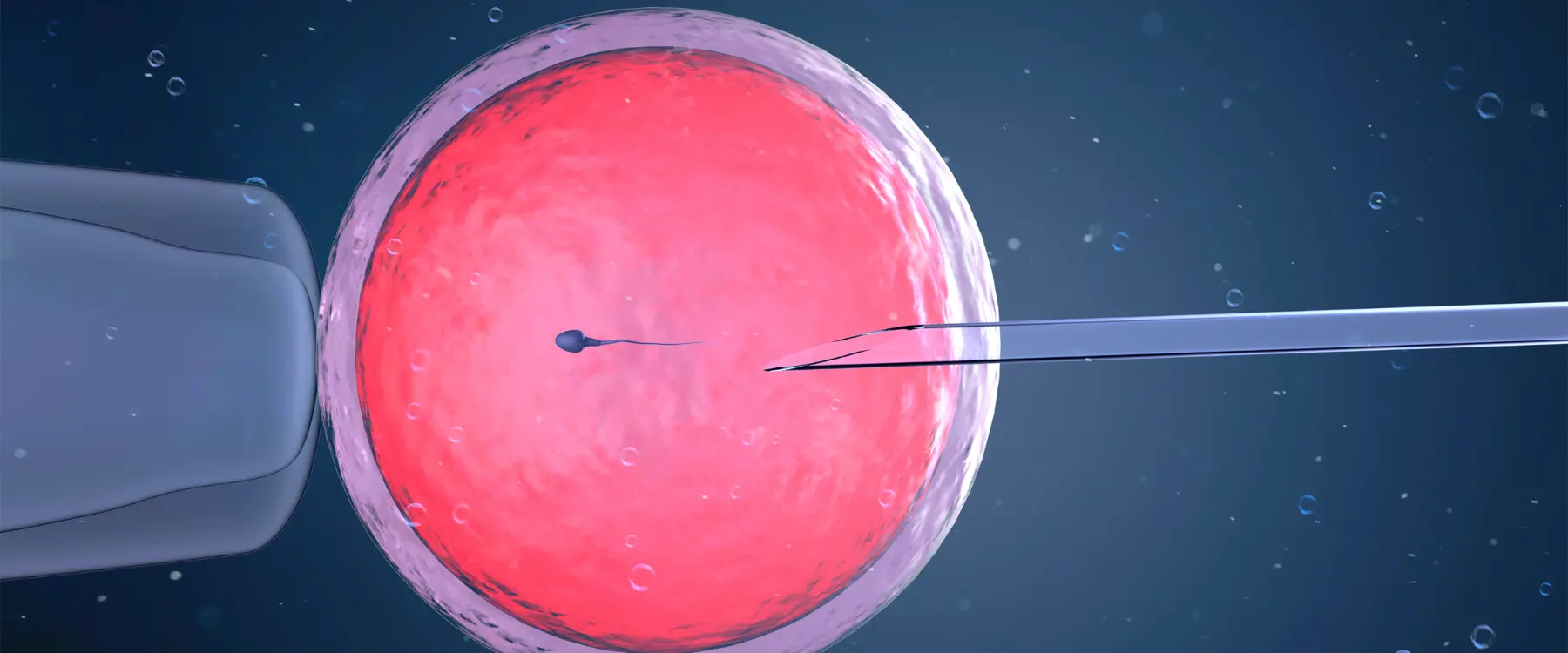
In Vitro Fertilisation (IVF) is a fertility treatment in which the egg is fertilised in the laboratory and then transferred to the uterus. But not all embryos have the same potential for implantation and development.
This is where PGT-A (Preimplantation Genetic Testing for Aneuploidies) comes in, which allows embryos to be tested for chromosomal abnormalities before transfer.
The main objective of PGT-A is to detect embryos with any chromosomal abnormalities (aneuploidies), which increases pregnancy rates and reduces the risk of repeat miscarriage and implantation failure.
Benefits or why IVF with PGT-A?
- Increased implantation rate
IVF with PGT-A significantly improves the chances of the embryo implanting in the uterus and resulting in a healthy pregnancy.
- Fewer miscarriages
Many miscarriages are due to chromosomal abnormalities. By transferring only healthy embryos, we reduce this risk.
- Higher live birth rate
By selecting the best embryos, we increase the chances of having a healthy baby at home.
- Fewer failed attempts and optimised treatment
Instead of multiple unsuccessful embryo transfers, PGT-A allows us to identify early on which embryos have the best chance of success.
- Especially recommended for women of advanced maternal age
From the age of 38 onwards, eggs are more at risk of chromosomal alterations. PGT-A helps to reduce the risks associated with age.
Who should perform IVF with PGT-A?
The use of PGT-A IVF is recommended in the following cases:
- Women over 38 years of age, where the risk of embryo abnormalities is higher.
- Patients with repeated miscarriages, as many gestational losses are related to aneuploidy.
- Cases of previous implantation failure after several unsuccessful embryo transfers.
- Patients with severe male factor, where sperm quality may influence embryo viability.
IVF success rates with PGT-A
At Vida Fertility, we know that IVF with PGT-A significantly improves pregnancy rates compared to conventional IVF. Thanks to chromosomal analysis, we not only select the best looking embryos, but also those that are chromosomally normal, thus increasing the chances of implantation and a healthy pregnancy.
The chances of success depend on multiple factors such as age, medical and reproductive history, but at Vida Fertility we guarantee a totally personalised approach.
Thanks to our fertility specialists who will design the most suitable treatment for you, and to our laboratories, which have the most advanced technology, we will be able to achieve a common goal: that you get your baby.
PGT-A IVF process at Vida Fertility
The PGT-A IVF procedure follows the same steps as a conventional IVF cycle, but with a key additional step: genetic analysis of the embryos prior to transfer.
Ovarian stimulation and fertilisation in the laboratory
It begins with ovarian stimulation to obtain multiple eggs, which are then extracted by follicular puncture. The eggs are then fertilised in the laboratory with selected sperm.
Embryo culture to blastocyst stage
The embryos develop for 5-6 days in incubators that mimic maternal womb conditions. During this time, our embryologists monitor their development, assessing their quality and capacity for cell division.
Embryo biopsy and genetic analysis (PGT-A)
Once the embryos reach the blastocyst stage, an embryo biopsy is performed in which some cells are extracted from the trophoectoderm (the outer layer of the embryo). These cells are sent to a specialised laboratory for genetic analysis, where the correct number of chromosomes is checked and abnormalities in the 23 pairs of chromosomes are ruled out.
Embryo cryopreservation and embryo selection
While the PGT-A results are obtained (approximately 10 days), the embryos are vitrified to preserve their viability. Once the euploid embryo with the highest implantation potential is identified, the embryo transfer is programmed at the optimal time in the patient’s cycle.
Embryo transfer and pregnancy monitoring
The selected embryo is thawed and transferred into the uterus in a painless and short procedure. From this moment on, the beta wait phase begins until the pregnancy test.
At Vida Fertility, we control every stage of the process with the most advanced technology and a team of expert embryologists and gynaecologists, ensuring that only viable embryos with the best chances of success are transferred.
FAQs about IVF with PGT-A
How much does PGT-A cost?
Dr. Marta Zermiani answers:
The price of PGT-A varies according to the needs of each patient and the number of embryos analysed. If you would like to know the total price at Vida Fertility, we recommend you to make an online or face-to-face appointment with one of our specialists.
How long do the PGT-A results take?
Dr. Marta Zermiani answers:
The process of genetic analysis of the embryos usually takes between 10 and 15 days, depending on the laboratory. During this time, the embryos are vitrified for transfer in a subsequent cycle.
Can PGT-A detect triploidy?
Dr. Marta Zermiani answers:
Yes, PGT-A is able to detect aneuploidy such as triploidy, where an embryo has an abnormal number of chromosomes, preventing viable development.
What diseases does PGT-A detect?
Dr. Marta Zermiani answers:
PGT-A does not detect specific genetic diseases, but abnormalities in the number of chromosomes (such as Down’s, Turner or Klinefelter’s syndrome). If there is a history of inherited diseases, PGT-M, which tests for specific genetic mutations, is recommended.
Is there a difference between PGT-A and PGT-M?
Dr. Marta Zermiani answers:
- PGT-A: Detects alterations in the number of chromosomes.
- PGT-M: It is used when there is an inherited genetic disease in the family and embryos without the mutation need to be selected.
Is IVF with PGT-A the best option for you?
If you have had failed IVF attempts, suffered recurrent miscarriages or want to increase your chances of success, the combination of IVF with PGT-A can make the difference in your treatment.
At Vida Fertility, we carry out a personalised study for each patient and offer you the best solutions to fulfil your dream of becoming a mother.
Book a consultation with our team and discover how IVF with PGT-A is the best option for you.
Ask for a consultation
You may also like




Last news


Testimonials







ℹ️ The information published on Vida Fertility is reviewed by our fertility specialists and medical team, following up-to-date scientific criteria and evidence-based medicine. Our team is a member at scientific societies such as SEF, ESHRE and SEGO.