
 Español
  Français
  Deutsch
  Italiano
  Nederlands
  International
Facing the Beta Wait: Symptoms, tips, and what NOT to do

In this article, we speak with Dr. Katharina Spies about the symptoms you may experience during the beta wait. We will provide tips on how to cope with this time more effectively and offer valuable information to help you face the results of the pregnancy test.

- What is the “Beta Wait”?
- How long should you wait to take a pregnancy test after transfer?
- Symptoms during the beta wait
- When do the symptoms of the beta wait begin?
- Beta-hCG levels
- Tips for handling the Beta Wait
- Frequently asked questions about the two-week wait after an embryo transfer
- Our fertility treatments
- Where can I find Vida Fertility centres in Spain?
What is the “Beta Wait”?
The beta wait, that period of approximately 15 days from embryo transfer in in vitro fertilization (IVF) or egg donation until the pregnancy test, is a time of intense emotions for prospective parents.
On the one hand, they experience feelings of euphoria, hope, and happiness at the possibility of a new family member. On the other hand, they also face stress, anxiety, and nerves, fearing a negative result on the pregnancy test.
This period is called the beta wait because the pregnancy test analyzes the beta-hCG hormone. This hormone, released by the embryo after implantation in the maternal uterus, is crucial for pregnancy development.
How long should you wait to take a pregnancy test after transfer?
When embryo transfer is done on day 5, at the blastocyst stage, the pregnancy test (which involves measuring the b-HCG hormone in blood) is scheduled for 10-12 days after transfer. This period is known as the luteal phase, which spans from the transfer to the pregnancy test.
Therefore, to obtain accurate results on the pregnancy test, it is recommended to wait at least 15 days, avoiding false positives or negatives due to insufficient hormonal levels.
Symptoms during the beta wait
During the beta wait, it is important to understand that the symptoms experienced by women do not necessarily indicate a successful pregnancy since the embryo has not yet implanted. The symptoms may be related to the side effects of ovarian stimulation and continued use of progesterone during this period.
What are the symptoms of the beta-wait period?
Some patients experience certain symptoms during the beta-wait period.
Symptoms that may or may not occur during the beta-wait period include:
- Lower back pain similar to menstrual cramps
- A sensation of twinges in the ovaries,
- Light spotting or bleeding or spotting,
- Frequent urge to urinate,
- Vaginal discharge that is clear or yellow,
- Abdominal bloating, constipation
- Headaches, migraines
- Breast tenderness,
- Nausea,
- Stress, changes in mood,
- Fatigue, insomnia and others.
It is worth noting that some women undergoing the beta wait following IVF experience no symptoms whatsoever and still achieve a positive pregnancy test.
When do the symptoms of the beta wait begin?
Symptoms of the two-week wait may appear from the first few days after embryo transfer, although they are most commonly related to hormonal medication, particularly progesterone, rather than to the pregnancy itself.
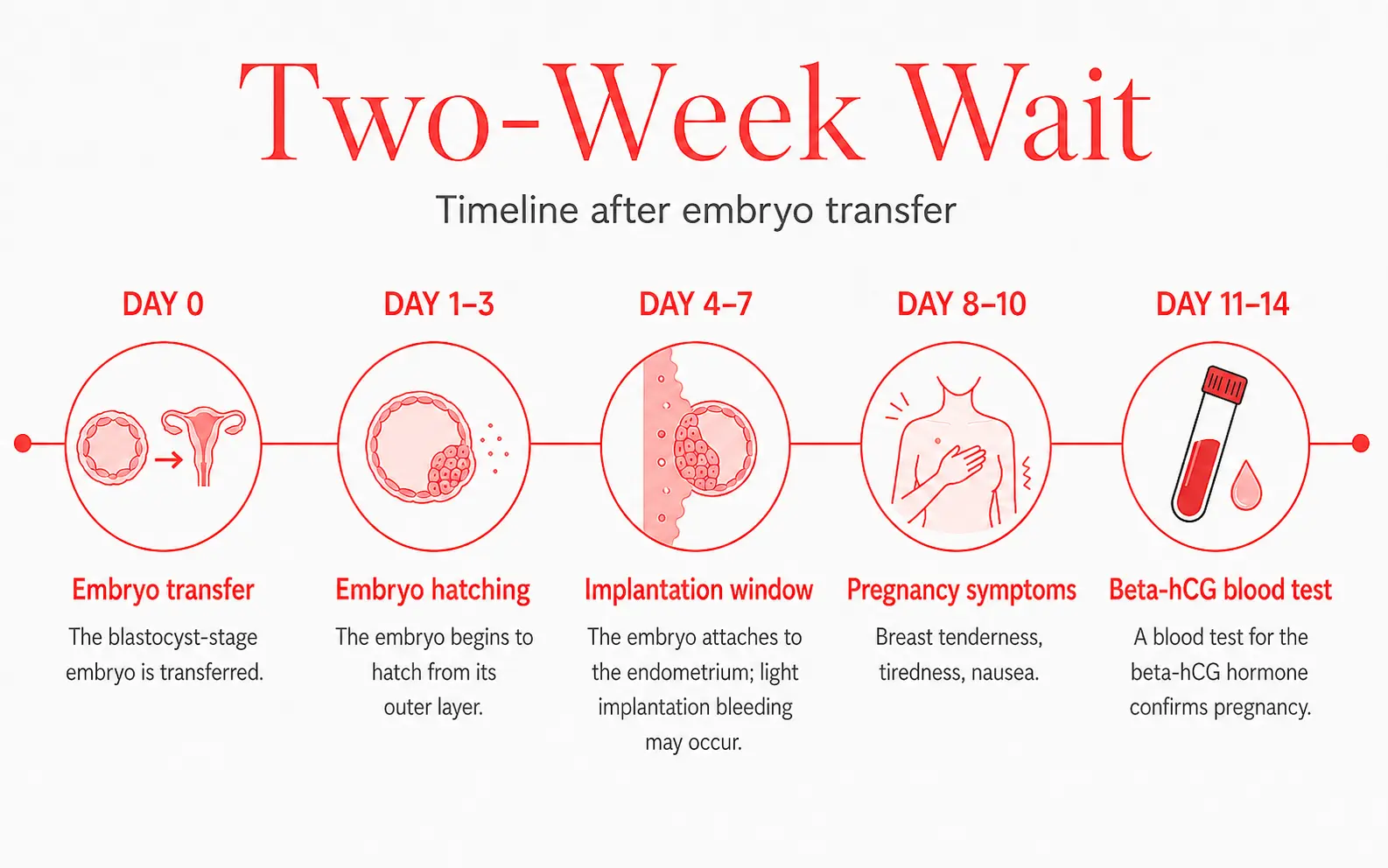
Symptoms and what is normal on day 5, day 10 or day 12 after transfer: Timeline of the two-week wait
If the embryo successfully implants, some women may begin to notice slight changes between 5 and 10 days after fertilisation, coinciding with the process of embryo implantation, implantation bleeding and the start of beta-hCG hormone production.
| Days after embryo transfer | What happens to the embryo? | Symptoms you may notice |
|---|---|---|
| Day 0 | The embryo is transferred into the uterus, usually at the blastocyst stage. | Generally, no specific symptoms are experienced. You may notice slight discomfort related to the procedure. |
| Days 1–2 | The blastocyst continues to expand and begins to emerge from the zona pellucida so that it can implant. In some cases, the embryo is transferred when it has already begun to hatch or after assisted hatching has been performed. | Mild pelvic discomfort, a pulling sensation, increased vaginal discharge or no symptoms at all. |
| Days 3–4 | The embryo completes the hatching process and begins to make contact with the endometrium. | You may notice slight pressure in the lower abdomen, although many patients experience no changes at all. |
| Days 4–7 | The embryo begins to attach to the endometrium and the implantation process starts. | Some women experience light pink or brown spotting and discomfort similar to premenstrual symptoms. Having no symptoms is also completely normal. |
| Days 8–10 | If implantation has progressed, beta-hCG production begins to increase. | Breast tenderness, tiredness, drowsiness, mild nausea or increased vaginal discharge. These symptoms may also be caused by progesterone. |
| Days 11–14 | Beta-hCG levels may become detectable through a blood test. | Symptoms may persist, become more noticeable or not appear at all. The only reliable way to confirm pregnancy is through the beta-hCG test recommended by the clinic. |
However, many patients experience no symptoms whatsoever and still obtain a positive pregnancy test.
For this reason, the presence or absence of symptoms during the beta wait does not indicate whether the treatment has been successful. The only reliable way to confirm pregnancy is to have the beta-hCG hormone level measured on the date specified by the medical team.
Beta-hCG levels
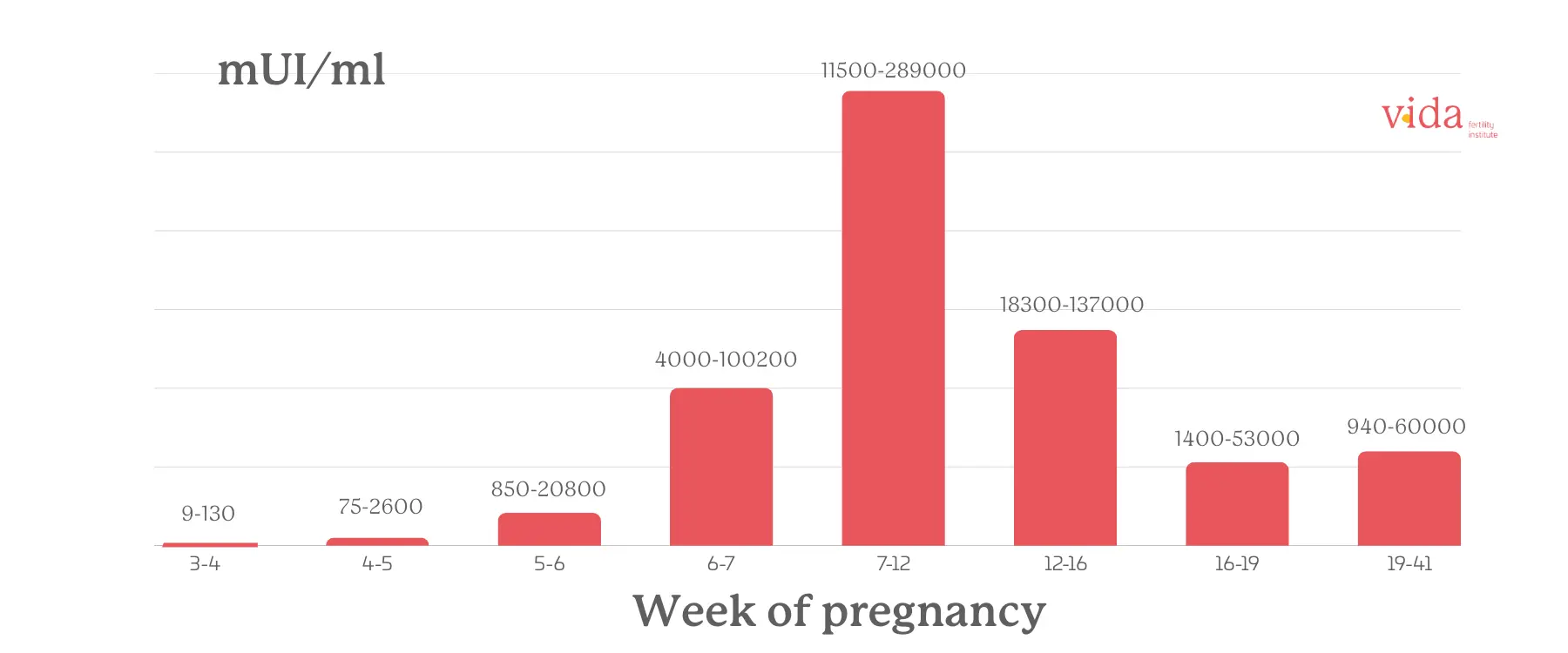
Beta-hCG hormone levels progressively increase from the beginning of gestation to the first trimester of pregnancy, after which they gradually decrease.
As a general reference, if you take the blood test on day 14, a value lower than 5 mIU/mL is considered negative, while a value higher than 5 mIU/mL is interpreted as positive.
If you get a result below 100 mIU/mL, it may be advisable to repeat the test in 2-3 days to confirm the progression of pregnancy. If beta-hCG levels double during this period, it indicates favorable pregnancy development; otherwise, it could be a biochemical pregnancy.
It is important to remember that beta-hCG hormone levels can vary significantly among women. Even if levels are initially low, pregnancy can progress normally as long as there is adequate increase in these values.
Tips for handling the Beta Wait
This stage can be emotionally challenging for prospective parents. Here are some tips for effectively coping with the beta wait:
- Maintain a normal life: Continue with daily routines and engage in work and leisure activities to keep your mind occupied.
- Prepare for a negative result: Not all conception attempts succeed in the first cycle. Stay positive and prepare for future attempts.
- Reduce stress: Practicing relaxation and breathing techniques can help alleviate anxiety and stress.
- Mutual support in the partnership: Understanding your partner’s emotions and feelings is essential.
- Psychological support: If you feel the need for help in coping with distress and anxiety, consider seeking support from mental health professionals.
- Avoid excessive rest: Unless your job involves pregnancy risks, taking sick leave is not necessary. Always follow medical recommendations.
- Don’t obsess over symptoms: It’s common to interpret minor symptoms as signs of pregnancy. Try to stay calm and not exaggerate discomfort.
- Diversify conversations: Discussing the beta wait is important, but don’t let it become the sole topic of conversation with friends, family, or your partner.
If you want more information or need to clarify your doubts, don’t hesitate to contact us and consider our fertility treatment options. We are here to provide the support you need on your journey to motherhood.
Frequently asked questions about the two-week wait after an embryo transfer
Dr Katharina Spies answers:
What happens 7 days after an embryo transfer?
Seven days after the embryo transfer (especially in the case of day 5 blastocysts), some embryos have already begun implantation. However, it is too early to confirm pregnancy with a urine test, as hCG levels may still be low. During this time, it is normal to have no symptoms or to experience mild changes such as breast tenderness, fatigue or premenstrual-like discomfort.
When should I take a pregnancy test after a blastocyst transfer?
In IVF with blastocyst stage embryo transfer (day 5), the most reliable pregnancy test is the beta-hCG blood test 9-12 days after transfer. Doing it earlier can give false negatives. For urine tests, it is advisable to wait at least 12-14 days to avoid errors in the result.
What are the beta-hCG values?
Beta-hCG hormone levels progressively increase from the beginning of gestation to the first trimester of pregnancy, after which they gradually decrease.
Symptoms after transfer: are they a sign of pregnancy?
Post-transfer symptoms can vary: from a complete absence of signs to tiredness, mild abdominal pain, twinges in the uterus or slight implantation bleeding. The presence or absence of symptoms does not confirm or rule out pregnancy. You will have to wait 9-12 days to take a pregnancy test.
What is the beta-hCG level 14 days after transfer?
A positive hCG value 14 days after transfer is usually higher than 50 mIU/ml, although this varies depending on the laboratory and the time of implantation. Lower values may indicate an early pregnancy or late implantation, and it is advisable to repeat the test after 48 hours to confirm that the hCG has doubled.
Negative test 9 or 10 days after transfer: does this mean there is no pregnancy?
A negative test so soon after transfer does not always mean that there is no pregnancy, especially if it is a blastocyst that implants late. Ideally, you should wait until the day indicated by your fertility clinic to take the definitive blood test.
When can your period start after a failed implantation?
In the event of a failed implantation, your period may start between 9 and 15 days later, depending on the type of medication and hormonal support used. Sometimes the bleeding may be different from usual.
Related articles
- What is the Genetic Compatibility Test (GCT)?
- Ovarian puncture: Everything you need to know
- The most affordable and simple solution to achieve a pregnancy
- Revealing Vida Fertility’s secrets: Fertility Clinics located in Madrid and Alicante
- Best IVF Clinic in Spain: Vida Fertility
- Age and women’s fertility: Up to what age can I get pregnant?
Vida Fertility Events
At Vida Fertility, we want to help our patients understand their treatment better.
We are convinced that a fertility process will be better lived, and with more
serenity, if the patient has received all the previous information.
For this reason, we organize events to inform, disseminate and explain how we adapt our processes to each person.
Book an appointment
You may also like






Last news about Beta Wait


Testimonial













Where can I find Vida Fertility centres in Spain?

📍 C/ Palermo 15, Hortaleza, 28043 Madrid
📞 Phone number: +34 919 29 83 23
🕒 Opening hours: Monday to Friday from 8am to 7pm
📍 Av. Óscar Esplá 1, Bajo, 03008 Alicante
📞 Phone number: +34 919 29 83 23
🕒 Opening hours: Monday to Friday from 8am to 7pm
ℹ️ The information published on Vida Fertility is reviewed by our fertility specialists and medical team, following up-to-date scientific criteria and evidence-based medicine. Our team is a member at scientific societies such as SEF, ESHRE and SEGO.