
 Español
 Français
 Deutsch
 Italiano
 Nederlands
 International

Does the “dual trigger” or double trigger work in patients with poor ovarian response? Here’s what Dr Anaïs Kilian’s study says
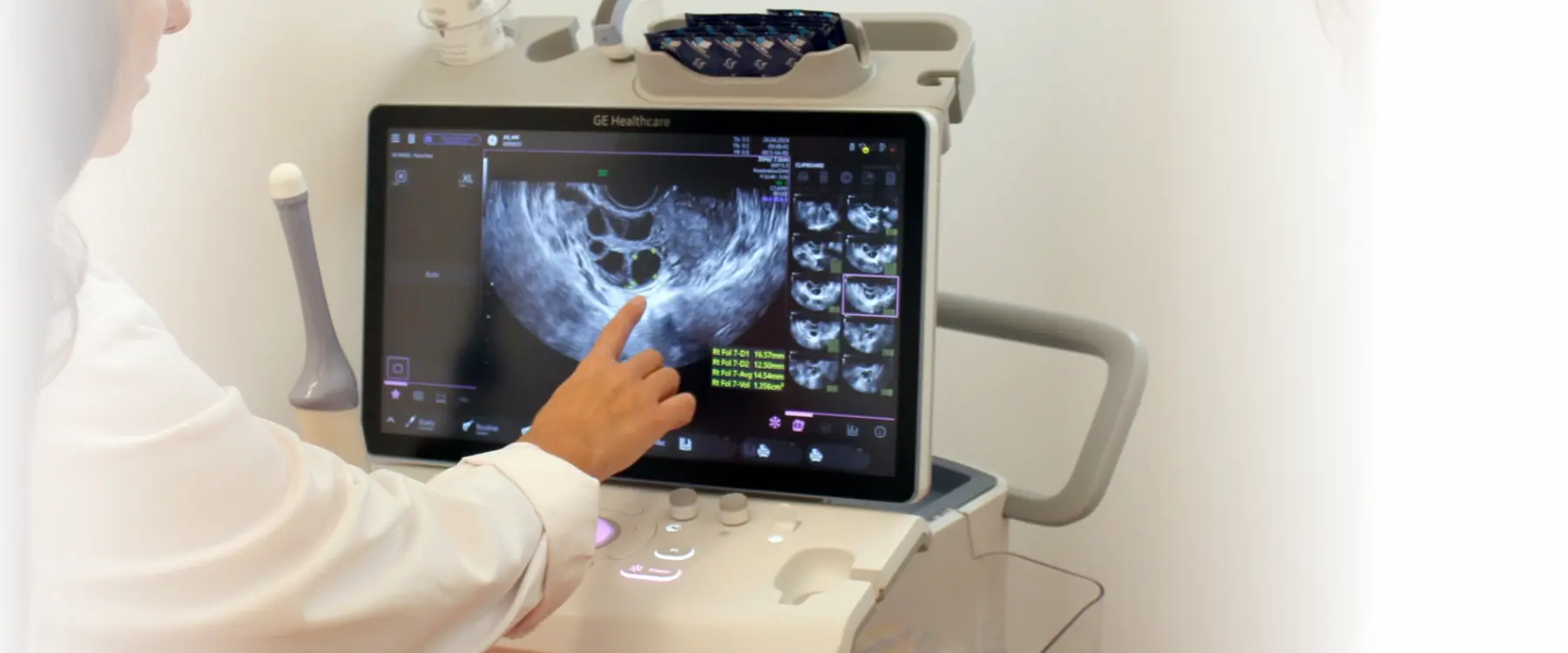
Dr Anaïs Kilian, of Vida Fertility, together with Hülya Gülmez, Dimitrios Rafail Kalaitzopoulos, Janna Pape, Tanya Karrer, Michael von Wolff and Angela Vidal, co-authored a scientific review on the dual trigger, a combination of two medicines administered prior to egg retrieval to help the eggs complete their maturation.

The scientific study by Dr Anaïs Y. Kilian of Vida Fertility analysed whether the double trigger improves outcomes in women with a poor ovarian response.
As we shall see below, the answer is yes: in some analyses, a higher number of mature eggs were observed.
The team reviewed 20 studies to answer a question that may arise when preparing for another IVF cycle: could changing this medication help to obtain more mature eggs when the ovaries have responded poorly to stimulation? You can read the full scientific post here.

- What is the trigger?
- What is a double trigger in IVF?
- Does the dual trigger work? Findings from the study by Dr Kilian and her team
- Benefits of the dual trigger
- Do more mature eggs mean a better chance of having a baby?
- Frequently asked questions about the dual trigger in patients with poor ovarian response
- Our fertility treatments
- The best fertility clinics in Spain
What is the trigger?
Let’s start at the beginning. The trigger is the medication administered at the end of ovarian stimulation to ensure the eggs complete their maturation before the egg retrieval procedure.
In a natural cycle, the body releases a hormone called LH. A rise in LH signals the egg to finish maturing and triggers ovulation. In an in vitro fertilisation (IVF) cycle, the medical team uses the trigger to send that signal at a specific time and schedules the egg retrieval to collect the eggs before ovulation occurs.
One of the medicines used as a trigger is hCG, a hormone that acts on the ovary in a similar way to LH. When combined with another medicine that causes the body to release its own LH, this is known as a double trigger or dual trigger.
What is a double trigger in IVF?
A double trigger, also known as a dual trigger or double induction, combines two medicines to induce the final maturation of the eggs before ovarian aspiration.
In Dr Anaïs Kilian’s study, this combination of hCG and a GnRH agonist was compared with the use of hCG alone.
Does the dual trigger work? Findings from the study by Dr Kilian and her team
Of the 20 studies reviewed, 16 provided data that could be combined in at least one of the analyses. When analysing the number of mature eggs, women who received the dual trigger obtained, on average, around half a mature egg more than those who received hCG alone. This figure summarises the difference between the two groups. Individual patient outcomes may vary.
The team also examined whether the outcome varied depending on how patients with poor ovarian response had been classified. With one classification system, known as Bologna, a small increase was observed in both the number of eggs retrieved and the number of mature eggs. With the other classification system, known as POSEIDON, the difference was less clear.
When the analysis was repeated, excluding studies where the design was most likely to have distorted the results, the benefit was no longer clear across the patient cohort as a whole. In the Bologna group, a small increase was still observed, albeit based on data from fewer studies.
Benefits of the dual trigger
In the pooled analysis, patients who received the double trigger obtained, on average, more oocytes at aspiration and around half an additional mature oocyte compared with those who received hCG alone.
The study confirms that the double trigger may help to obtain more mature oocytes in some patients with a poor ovarian response.
Do more mature eggs mean a better chance of having a baby?
In IVF, having more mature eggs means there are more eggs that can be attempted to be fertilised. Afterwards, for a baby to be born, several things still need to happen. An egg must be fertilised, the embryo must develop and implant in the womb, and the pregnancy must continue.
The review also examined what happened at these stages. In the Bologna group, an initial analysis found more pregnancies confirmed by ultrasound with the double trigger protocol. This difference was no longer clear when the analysis was repeated using studies with a lower risk of bias. Across the entire patient cohort, the review also found no clear difference in spontaneous miscarriages, nor could it demonstrate that more babies were born with the double trigger protocol.

Frequently asked questions about the dual trigger in patients with poor ovarian response
Dr Anaïs Kilian, fertility specialist at Vida Fertility Madrid, answers:
What should I look into if I obtained few mature eggs during my IVF treatment?
Imagine two IVF cycles. In one, two eggs were retrieved and both were mature. In the other, six were retrieved, but only two were mature. Both reports record the same number of mature eggs, although they raise different questions.
In the first case, it is worth checking how many follicles grew during stimulation and how many eggs were retrieved. In the second, it is also worth asking what might have affected maturation and how the final phase of the cycle was managed.
If you are preparing for another IVF cycle, at Vida Fertility you can bring any stimulation, egg retrieval and laboratory reports you have to your consultation. With these, we can review how many follicles grew, which trigger was used and how many eggs were retrieved and were mature.
According to the study, the routine use of the double trigger in all patients with a poor response is not supported. However, every case is different and treatment must be tailored to the individual.
What if I have low ovarian reserve and haven’t had IVF yet?
Anti-Müllerian hormone (AMH) and the antral follicle count – in other words, ovarian reserve – help to estimate how many follicles might respond to stimulation. If you are preparing for your first IVF cycle, you can ask what response your team expects and how they will assess this during the cycle.
In the study, it was not possible to identify, based on data such as age or AMH, which patients are most likely to benefit from the double trigger. For this reason, at Vida Fertility we emphasise the importance of carrying out the necessary fertility tests for each individual case.
Can a fresh embryo transfer be carried out after a double trigger?
Yes. The double trigger is used before egg retrieval to help the eggs finish maturing. If a transfer-ready embryo is subsequently obtained and the cycle conditions are suitable, the transfer can be carried out during that same cycle. The medical team assesses, amongst other factors, the condition of the endometrium and whether there is a risk of ovarian hyperstimulation. If that risk is high, they may recommend freezing the embryos and carrying out the transfer at a later date.
Would you like to understand what happened during your previous IVF treatment? As part of a second opinion at Vida Fertility, we can review the cycle reports with you, explain what they tell us about the response and maturation of the eggs, and assess which options it makes sense to consider for your next attempt.





Vida Fertility Events
At Vida Fertility, we believe that feeling informed is the first step towards a more confident fertility journey.
Through our events, talks and private consultations, we help patients understand their options, ask questions and receive personalised guidance from our fertility specialists in Spain.
Discover our upcoming events and meet the Vida Fertility team.
Ask for a consultation
You may also like



Last news


Testimonials






The best fertility clinics in Spain

📍 C/ Palermo 15, Hortaleza, 28043 Madrid
📞 Phone number: +34 919 29 83 23
🕒 Opening hours: Monday to Friday from 8am to 7pm
📍 Av. Óscar Esplá 1, Bajo, 03008 Alicante
📞 Phone number: +34 919 29 83 23
🕒 Opening hours: Monday to Friday from 8am to 7pm
ℹ️ The information published on Vida Fertility is reviewed by our fertility specialists and medical team, following up-to-date scientific criteria and evidence-based medicine. Our team is a member at scientific societies such as SEF, ESHRE and SEGO.