
 Español
 Français
 Deutsch
 Italiano
 Nederlands
 International

Could the endometrial microbiome affect fertility? Dr Anaïs Kilian presents research at DGGG 2026 in Munich

After unsuccessful embryo transfers or pregnancy loss, it is understandable to want a clearer explanation before taking the next step. Research has identified an association between chronic endometritis and changes in the bacteria found in the uterine lining. However, this does not establish that these changes cause infertility or that endometrial microbiome treatment improves the chance of having a baby.
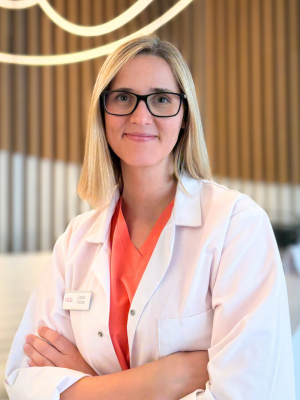
Dr med. Anaïs Y. Kilian is presenting a research poster on this subject at the 66th Congress of the German Society of Gynaecology and Obstetrics (DGGG), taking place in Munich from 21 to 24 October 2026.

- What research is Dr Anaïs Kilian presenting?
- What is chronic endometritis?
- What was the aim of the review?
- How was the research conducted about endometrial microbiome ?
- What did the review find about the endometrial microbiome?
- What do these findings mean about endometrial microbiome for reproductive health?
- What should you do if you are concerned about endometrial microbiome?
- Our fertility treatments
- The best fertility clinics in Spain
What research is Dr Anaïs Kilian presenting?
The poster presents “The Role of Endometrial Microbiota in the Pathogenesis of Chronic Endometritis: A Systematic Review and Meta-Analysis”, published in Biomedicines on 10 April 2026, volume 14, issue 4, article 871.
Dr Kilian co-authored the publication with Angela Vidal, Vithusha Vinayahalingam, Branislav Zagrapan, Janna Pape, Tanya Karrer and Michael von Wolff. Angela Vidal and Anaïs Y. Kilian contributed equally to the work.
A systematic review brings together studies addressing a specific question. A meta-analysis combines comparable numerical results to examine the overall evidence.
The review included 22 studies involving 4,022 women. Of these, 2,947 women contributed comparable microorganism data to the meta-analysis. These figures describe existing research populations, rather than patients enrolled in a new clinical trial.
What is chronic endometritis?
Chronic endometritis is persistent inflammation of the endometrium, the tissue lining the inside of the uterus. It is often associated with few or no symptoms.
It has been linked to recurrent implantation failure, recurrent pregnancy loss and unexplained infertility. These associations do not mean it explains every unsuccessful transfer or miscarriage.
The condition differs from endometriosis, in which tissue similar to the uterine lining develops outside the uterus.

What was the aim of the review?
The review aimed to systematically assess and meta-analyse the association between chronic endometritis (CE) and changes in the endometrial microbiome, alongside their implications for reproductive health.
How was the research conducted about endometrial microbiome ?
The researchers searched MEDLINE, Embase, Web of Science, Scopus, Cochrane CENTRAL and Google Scholar for studies that diagnosed CE using CD138 immunostaining and assessed the endometrial microbiota using molecular techniques.
They extracted the relevant data, assessed study quality and performed a meta-analysis where comparable results were available.
What did the review find about the endometrial microbiome?
The systematic review included 22 studies involving 4,022 women. CE was associated with a lower prevalence of Lactobacillus-dominated microbiota and greater detection of non-Lactobacillus species, particularly Streptococcus spp., Enterococcus spp., Escherichia coli, Staphylococcus spp., Ureaplasma spp. and Gardnerella vaginalis.
The meta-analysis included 2,947 women. Enterococcus spp. and Ureaplasma spp. were significantly more prevalent in women with CE. For Streptococcus spp., E. coli, Staphylococcus spp. and G. vaginalis, the observed trends did not reach statistical significance.
Significant differences between study results, known as heterogeneity, were found only for E. coli and Streptococcus spp.
What do these findings mean about endometrial microbiome for reproductive health?
CE was associated with microbial dysbiosis: an altered bacterial balance characterised by reduced Lactobacillus dominance and enrichment of potentially pathogenic microorganisms, particularly Enterococcus and Ureaplasma spp.
These findings suggest that the endometrial microbiome may contribute to chronic inflammation and adverse reproductive outcomes. However, they do not establish a causal relationship.
Differences between studies and the limited evidence available highlight the need for standardised diagnostic methods and rigorous clinical trials before these findings can be translated into routine clinical practice.
Dr Kilian’s poster presentation at DGGG 2026 brings these findings into discussion with fellow specialists, contributing to the ongoing evaluation of the endometrial microbiome’s role in reproductive medicine.

What should you do if you are concerned about endometrial microbiome?
An unsuccessful embryo transfer does not, by itself, diagnose chronic endometritis or a microbiome imbalance. Whether further investigations could help depends on your medical history, previous results and treatment journey.
A useful consultation should clarify what a proposed test could reveal, whether it would change your care and where uncertainty remains.
Dr Kilian’s presentation brings this research into discussion with colleagues at DGGG 2026, contributing to the careful evaluation of emerging evidence in reproductive medicine.
If previous treatment has left you with unanswered questions, request a consultation with Vida Fertility. Our team can review your history and discuss the next steps appropriate to your situation.





Vida Fertility Events
At Vida Fertility, we believe that feeling informed is the first step towards a more confident fertility journey.
Through our events, talks and private consultations, we help patients understand their options, ask questions and receive personalised guidance from our fertility specialists in Spain.
Discover our upcoming events and meet the Vida Fertility team.
Ask for a consultation about endometrial microbiome
You may also like


Last news


Testimonials






The best fertility clinics in Spain
📍 C/ Palermo 15, Hortaleza, 28043 Madrid
📞 Phone number: +34 919 29 83 23
🕒 Opening hours: Monday to Friday from 8am to 7pm
📍 Av. Óscar Esplá 1, Bajo, 03008 Alicante
📞 Phone number: +34 919 29 83 23
🕒 Opening hours: Monday to Friday from 8am to 7pm
ℹ️ The information published on Vida Fertility is reviewed by our fertility specialists and medical team, following up-to-date scientific criteria and evidence-based medicine. Our team is a member at scientific societies such as SEF, ESHRE and SEGO.