
 Español
  Français
  Deutsch
  Italiano
  Nederlands
  International
ICSI vs IVF: which is better? What are the chances?

Have you ever wondered which technique, IVF vs ICSI, is better in an assisted reproduction treatment? We talk to Beatriz Lozano about the differences between IVF vs ICSI during fertility treatment.


- What is In Vitro Fertilisation?
- What is ICSI?
- Differences between IVF or ICSI
- When to choose IVF vs ICSI?
- Step by step of the IVF process
- ICSI step-by-step
- Advantages and disadvantages of fertilisation with IVF or ICSI
- Frequently Asked Questions about the differences between IVF or ICSI
- IVF or ICSI at Vida Fertility
- Our fertility treatments
- Where can I find Vida Fertility centres in Spain?
What is In Vitro Fertilisation?
In Vitro Fertilisation (IVF) is an assisted reproduction technique in which eggs and sperm are combined in a laboratory to facilitate fertilisation.
This process involves ovarian stimulation to produce multiple eggs, collection of these eggs, and subsequent incubation with sperm in a controlled environment.
Once the embryos develop, the most viable embryo is selected for transfer to the woman’s uterus.
IVF is a common option for couples with unexplained infertility, ovulatory problems, and blocked fallopian tubes.
What is ICSI?

Intracytoplasmic Sperm Injection (ICSI) is an advanced assisted reproductive technique used mainly in cases of severe male infertility.
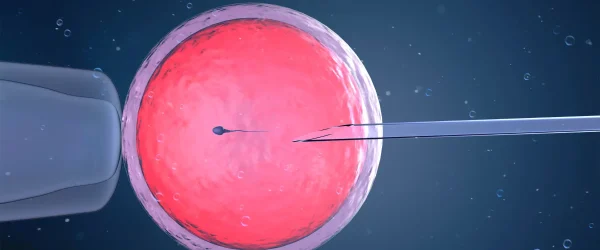
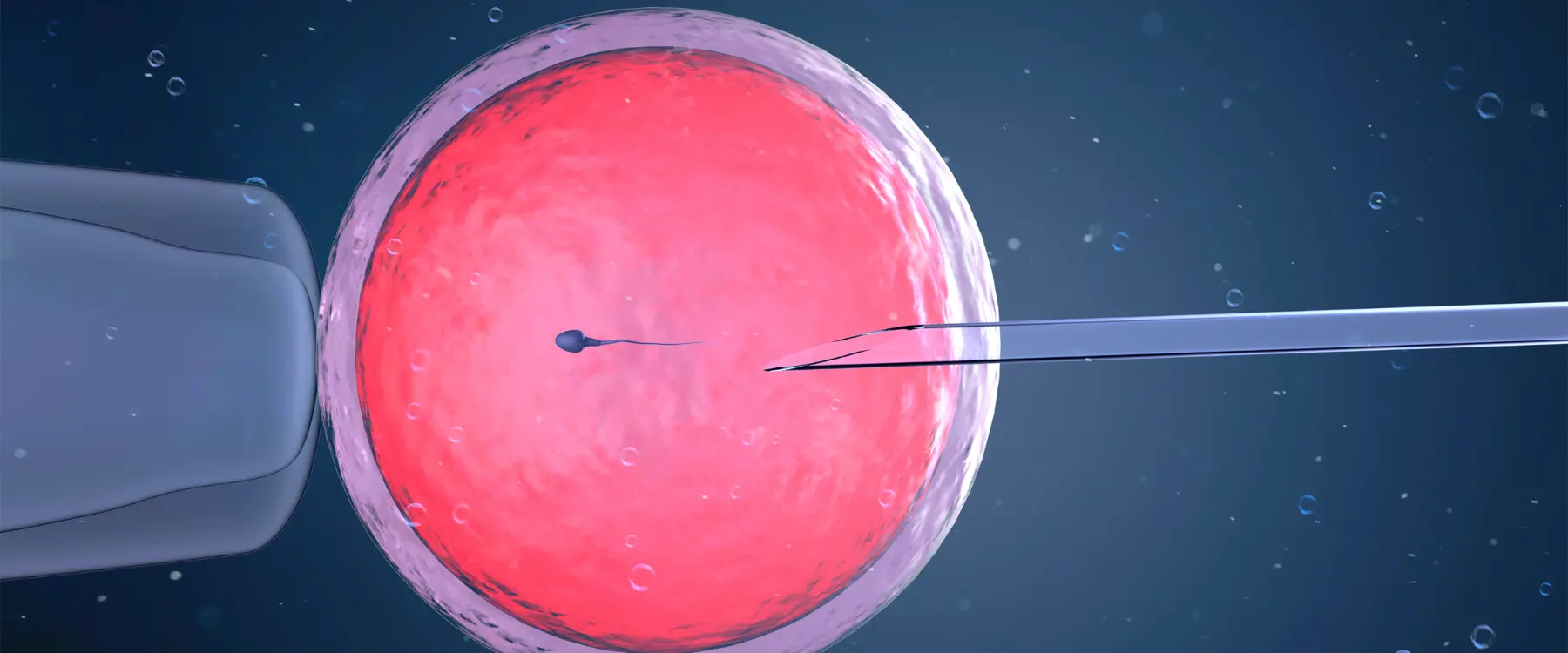
Unlike conventional IVF, in ICSI, a single sperm is injected directly into the egg to facilitate fertilisation. This procedure is performed under a microscope using a very fine needle.
ICSI is especially beneficial for men with low sperm count, reduced sperm motility, or sperm morphology problems.
As with IVF, the resulting embryos are cultured and then transferred into the woman’s uterus to initiate pregnancy.
Differences between IVF or ICSI
The differences between IVF (In Vitro Fertilisation) and ICSI (Intracytoplasmic Sperm Injection) are fundamental in the world of assisted reproduction.
- Conventional IVF involves placing eggs and sperm together in a culture dish for fertilisation to occur naturally. Here is the IVF process in Spain.
- ICSI involves selecting and microinjecting a single sperm directly into the egg, increasing the chances of fertilisation in cases of male fertility problems.
When to choose IVF vs ICSI?
The choice between IVF vs ICSI depends on several factors, mainly related to male infertility and sperm quality and quantity.
- IVF is recommended in cases where there are no significant male fertility problems.
- ICSI is preferred when there is:
- low sperm motility,
- low sperm counts,
- implantation failure with conventional IVF fertilisation.
Step by step of the IVF process

- Ovarian stimulation: Hormone medication to produce multiple eggs.
- Egg retrieval and egg collection: Egg retrieval from the ovary.
- IVF fertilisation: The eggs are placed on a plate together with the sperm in the laboratory incubator for the union between the two gametes to take place.
- Embryo culture: Observation of the embryos using Time-Lapse.
- Embryo transfer
ICSI step-by-step
The ICSI step-by-step is identical to the step-by-step process of IVF, however, the technique of fertilisation of the oocyte changes. The ICSI procedure would be:
- Ovarian stimulation
- Ovarian puncture
- Sperm microinjection by ICSI: we introduce the sperm into the egg to obtain fertilisation.
- Embryo culture
- Embryo transfer
Advantages and disadvantages of fertilisation with IVF or ICSI
In vitro fertilisation or IVF:
- Less invasive for the sperm.
- Requires a larger number of motile sperm.
Intracytoplasmic Sperm Injection or ICSI:
- Higher fertilisation rate in cases of male infertility.
- Requires only one viable sperm per egg.
- More accurate technique.
Frequently Asked Questions about the differences between IVF or ICSI
When is it more advisable to use ICSI instead of IVF?
Dr. Beatriz Lozano answers:
The quality of the gametes, especially the sperm quality, is what will make us decide whether to use one technique or the other.
However, the ICSI technique is more advisable in cases of low sperm motility, low sperm count or previous fertilisation failures with conventional IVF.
Is ICSI more effective than IVF?
Dr. Beatriz Lozano answers:
ICSI may be more effective in specific male infertility situations, but IVF is effective for many couples without significant male fertility problems.
What are the risks associated with IVF and ICSI?
Dr. Beatriz Lozano answers:
In IVF treatments in which ovarian stimulation is performed, there is a risk of ovarian hyperstimulation syndrome. But the incidence is very low, less than 10 per 10,000 treatments.
Other risks associated with fertility treatments are nowadays controllable thanks to technological advances, as well as the medication used and the safety protocols used in our clinics, so they occur very rarely (genital infections, haemorrhages or complications derived from anaesthesia).
The possibility of multiple pregnancy is solved by the transfer of a single embryo, thanks to the progress in prolonged culture for the selection of the best embryo. The risk of ectopic pregnancy is around 3%, similar to pregnancies achieved naturally.
IVF or ICSI at Vida Fertility

At Vida Fertility, we are committed to providing personalised fertility treatments, based on the individual needs of each patient. To learn more about IVF or ICSI and which option might be right for you, we invite you to schedule a consultation with our specialists.
Ask for a consultation
You may also like




Last news


Testimonials












Where can I find Vida Fertility centres in Spain?
📍 C/ Palermo 15, Hortaleza, 28043 Madrid
📞 Phone number: +34 919 29 83 23
🕒 Opening hours: Monday to Friday from 8am to 7pm
📍 Av. Óscar Esplá 1, Bajo, 03008 Alicante
📞 Phone number: +34 919 29 83 23
🕒 Opening hours: Monday to Friday from 8am to 7pm
ℹ️ The information published on Vida Fertility is reviewed by our fertility specialists and medical team, following up-to-date scientific criteria and evidence-based medicine. Our team is a member at scientific societies such as SEF, ESHRE and SEGO.