
 Español
  Français
  Deutsch
  Italiano
  Nederlands
  International
The IVF process in Spain: the step by step IVF process

Do you want to know what the IVF process is like in Spain? At Vida Fertility we spoke to, medical director and fertility specialist, Dr Katharina Spies about the stages of IVF in fertility clinics in Spain.


What is in vitro fertilisation (IVF)?
In vitro fertilisation (IVF) is the union of egg and sperm in a laboratory to create embryos.
The process of In Vitro Fertilisation in Spain
First step: Initial consultation
Firstly, at Vida Fertility, the first consultation is designed to offer a complete and personalised diagnosis of the patient’s fertility.
Indeed, during this consultation, valued at €90 (which is discounted if treatment is started), several essential tests are carried out:
- Collection of the patient’s medical history and background.
- Analysis of ovarian reserve through analysis of AMH levels and transvaginal ultrasound.
- Gynaecological examination
- Seminogram
- Evaluation of results to establish a diagnosis.
In addition, a treatment is proposed with steps to follow and a budget adapted to the patient’s needs, guaranteeing a 100% personalised and confidential approach.
Ovarian stimulation step by step
Secondly, the aim of ovarian stimulation is to get the ovaries to produce multiple mature eggs in a single menstrual cycle.
Therefore, in IVF treatment, it is essential to obtain more than one egg to increase the chances of fertilisation and to be able to select the best quality embryos for transfer.
Thus, ovarian stimulation aims to do just this: to stimulate the ovaries to develop multiple follicles, each containing an egg, thus maximising the chances of achieving pregnancy.
To achieve this goal, hormonal drugs, primarily gonadotropins, are used. These drugs mimic the natural hormones that regulate the menstrual cycle, but in higher doses to induce the development of several follicles simultaneously.
How long does ovarian stimulation last?
On this occasion, this stage of stimulation usually lasts between 8 and 14 days, depending on the individual woman’s response to the medication. During this period, the patient should visit the fertility clinic regularly to monitor follicle development and adjust the dose of medication as needed.
How do you identify that the ovaries are ready for puncture?
The gynaecologist uses two main tools to determine when the follicles have matured sufficiently and the ovaries are ready for puncture:
- Transvaginal ultrasounds: Through these ultrasounds, the specialist measures the size of the follicles in the ovaries. A follicle is considered mature when it reaches a size of approximately 18-20 mm.
- Estradiol Blood Levels: Estradiol is a hormone produced by the growing follicles. Estradiol blood levels provide an indirect indication of the number and maturity of follicles.
When the gynaecologist confirms that the follicles are ready, the hCG injection is scheduled to trigger ovulation and the ovarian puncture is planned, usually 32-36 hours after the injection.
For more information on the whole process of ovarian stimulation, including tips and things to consider, we invite you to read more in our blog “All about ovarian stimulation”.
The step-by-step ivf process in spain of ovarian puncture
The main objective of ovarian puncture is to retrieve the mature eggs that have developed during the ovarian stimulation phase.
- Preparation and Anaesthesia: The patient is prepared for the procedure, which is usually performed under conscious sedation or light anaesthesia to ensure that she feels no pain or discomfort during the puncture.
- Ultrasound guidance: The gynaecologist uses transvaginal ultrasound to guide a fine needle into the ovaries. The ultrasound provides a clear view of the follicles, allowing the needle to be accurately inserted into each follicle.
- Follicle aspiration: Once the needle is in the follicles, the gynaecologist uses a transvaginal ultrasound to guide a fine needle into the ovaries.
- Follicle aspiration: Once the needle is in place, gentle suction is used to aspirate the contents of the follicles, which includes the follicular fluid and mature eggs. This process is repeated for each follicle visible in the ovaries.
- Egg collection: The retrieved eggs are immediately placed in specific culture media in the embryology laboratory, where they will be evaluated by embryologists for maturity and viability.
How long does the ovarian puncture take?
The ovarian puncture procedure is relatively quick, lasting between 20 and 30 minutes in total.
After sedation, you can continue with your life as normal, however, it is advisable not to do any physical exercise after the ovarian puncture and not to travel for the next 24 hours.
Fertilisation in the laboratory
The main objective of fertilisation in the laboratory is to bring the egg and sperm together so that fertilisation can occur and an embryo can be formed.
How is fertilisation performed in a laboratory?
There are two main techniques for fertilisation in the laboratory: conventional IVF and ICSI (Intracytoplasmic Sperm Injection).
- Conventional IVF: Eggs and sperm are placed together in a culture dish under controlled conditions. Here, the sperm swim freely to the egg and, if all goes well, one of them fertilises the egg naturally.
This method is mainly used when the eggs and sperm are of good quality and capable of fertilisation on their own.
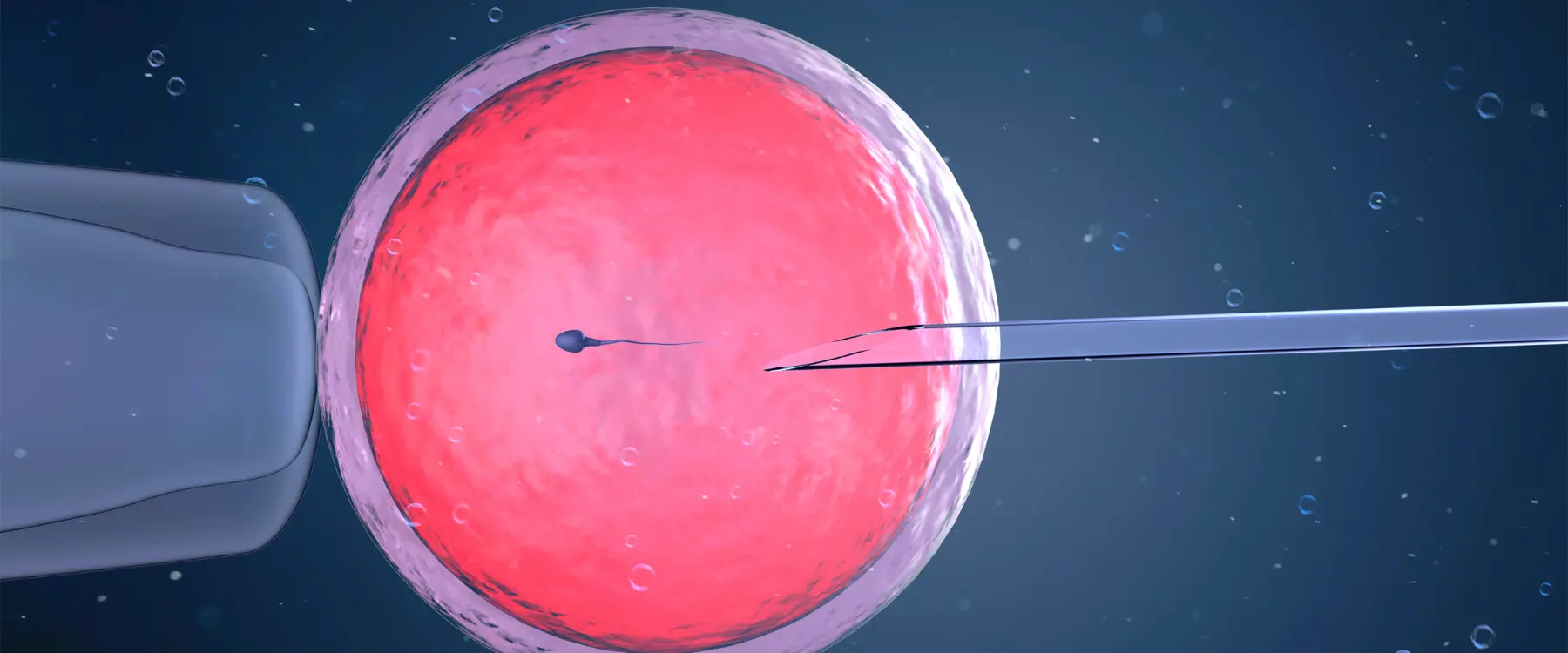
- ICSI (Intracytoplasmic Sperm Injection): In cases where the sperm have difficulty fertilising the egg on their own, such as in cases of severe male infertility, the ICSI technique is used.
In this procedure, a single sperm is selected and, using a very fine needle, injected directly into the cytoplasm of the egg. This significantly increases the chances of fertilisation.
Embryo development – IVF process
After fertilisation, the resulting embryos are cultured in the laboratory for several days, usually between 3 and 5 days. During this time, the development of the embryos is carefully monitored to assess their quality and viability.
Those embryos that show optimal development will be selected for transfer to the uterus or for cryopreservation.
Endometrial preparation – IVF process
In order for an embryo to successfully implant and result in pregnancy, the endometrium (the inner layer of the uterus) must be in a receptive state, i.e. have the appropriate thickness, structure and vascularisation.
The primary goal of endometrial preparation is to create an optimal uterine environment for embryo implantation.
The process of endometrial preparation prior to transfer
Endometrial preparation is carried out by administering hormones that simulate the body’s natural cycle, preparing the uterus for the arrival of the embryo. This process can vary depending on whether the cycle is natural or controlled:
- Natural Cycle: In women who ovulate regularly, the natural cycle is monitored to identify when the endometrium is most receptive. Endometrial growth is followed by ultrasound and, in some cases, supplemented with progesterone administration to ensure that the endometrium is at the correct stage when the embryo transfer is performed.
- Controlled Cycle: In women who do not ovulate regularly or when a frozen embryo is used, a hormonal protocol is administered to control the development of the endometrium. This protocol includes oestrogens to stimulate endometrial thickening and then progesterone to induce the secretory phase, which is the most receptive for implantation. The hormones are administered orally, transdermally or intramuscularly, according to medical indications.
How long does the Endometrial Preparation last?
Endometrial preparation usually lasts between 10 and 14 days in a controlled cycle, although it may vary according to the individual response of each patient. During this time, transvaginal ultrasounds are performed to measure the thickness and structure of the endometrium, ensuring that it reaches the optimal state for embryo transfer.
What tests are performed to identify endometrial receptivity?
The ERA test is one of the most advanced tools for determining the window of implantation. It is a genetic test that analyses the expression of more than 200 genes associated with endometrial receptivity. It is performed by obtaining an endometrial biopsy in a cycle prior to the embryo transfer.
Embryo transfer – IVF process
The main objective of embryo transfer is to place the embryos in the uterus at the optimal time for implantation. This procedure is essential, as even with high quality embryos, a poorly timed or technically incorrect transfer can significantly decrease the chances of success.

Step-by-step embryo transfer
The embryo transfer procedure is relatively simple and does not require anaesthesia. The usual process is described below:
- Embryo Selection: Prior to transfer, embryologists select the best embryos based on their development and morphology. This is a crucial moment, as the embryos with the highest implantation potential are selected.
- Transfer: Using ultrasound guidance for accuracy, the gynaecologist inserts a thin, flexible catheter through the cervix into the uterus. Selected embryos are loaded into the catheter and gently deposited into the uterine lining.
- Completion: After the transfer, the catheter is carefully removed, and the patient remains at rest in the clinic for a few minutes before being able to go home. The transfer itself is painless and takes about 10-15 minutes.
Post-transfer follow-up- IVF process
The post-transfer follow-up involves a series of steps and care carried out by the clinic to guarantee the best possible conditions for the implantation of the embryo and the early development of the pregnancy.
- Instructions and Recommendations: Immediately after the transfer, the patient receives detailed instructions on activities to avoid and guidelines to follow after the embryo transfer to maximise the chances of success. This includes recommendations on rest, nutrition, medication and physical activities.
- Symptom Monitoring: The patient is instructed to watch for certain symptoms that could indicate problems, such as heavy bleeding or severe pain, and is provided with information on when to contact the clinic.
- Emotional Support: The post-transfer phase can be a period of great emotional stress. At Vida Fertility you can call us at any time. We advise psychological support to take care of yourself, to lean on your loved ones and to turn to a specialist if the mental burden is too intense.
- Regular contact: During this period, we maintain close contact with the patient. Calls or consultations are scheduled to assess how you are feeling and if there have been any changes that require medical attention.
- Preparation for the Pregnancy Test
Beta wait and Pregnancy Test – IVF process
Once the embryo transfer has been performed in an in vitro fertilisation (IVF) treatment, one of the most anticipated and, at the same time, most difficult phases for patients begins: the beta wait.
The main purpose of the pregnancy test is to confirm whether embryo implantation has occurred in the endometrium and, therefore, whether a pregnancy has begun. This test is performed by measuring the levels of the hormone beta-hCG (human chorionic gonadotropin) in the blood, which is produced by the body when the embryo implants in the uterus.
When to perform a pregnancy test after embryo transfer
The pregnancy test in IVF treatment is usually performed by a blood test that measures beta-hCG levels. The process is detailed below:
- Waiting Time: The pregnancy test is not performed immediately after the embryo transfer. It is necessary to wait 10-14 days after the transfer for beta-hCG levels to be detectable in the blood. This period is known as the beta wait.
- Blood test: On the date indicated by the medical team, a blood test is performed to measure beta-hCG levels. A positive and increasing level of this hormone indicates that the embryo has implanted and pregnancy has begun.
- Interpretation of Results: If beta-hCG levels are positive, an ultrasound scan is scheduled a few weeks later to confirm the presence of the gestational sac and, later, to listen for the heartbeat of the embryo.
Frequently Asked Questions about the IVF process in Spain
How long does the entire IVF process take?
Dr. Katharina Spies answers:
The IVF treatment in Madrid generally spans between 3 and 5 weeks, starting from ovarian stimulation until the time of embryo transfer.
However, the duration may differ depending on the individual patient’s response to the treatment, the tests required, and the coordination between the medical team and the patients.
What are the chances of success with IVF?
Dr. Katharina Spies answers
The chances of success of in vitro fertilisation (IVF) can vary considerably depending on several factors, including the woman’s age, the cause of infertility, the quality of the embryos, and the specific characteristics of the treatment cycle.
We recommend that you contact us through our contact form, telephone or address.
What are the possible side effects and complications?
Dr. Katharina Spies answers
It is inevitable, as with any medical procedure, to prevent complications. Even if everything is under control, it can happen in the process of stimulation that the ovaries respond too much to the treatment. We may not achieve fertilisation in the laboratory due to external causes, such as genetic incompatibility between the gametes. Or the embryos may not develop optimally due to insufficient quality or genetic abnormalities.
However, all stages of the in vitro fertilisation process in Spain are controlled, regulated and monitored by the best specialists and advanced technology to reduce the risk of complications and side effects.
What happens if fertilisation is not achieved in the laboratory?
Dr. Katharina Spies answers
In some cases, despite the best efforts and techniques, fertilisation of the eggs is not achieved. This can be due to various factors, such as the quality of the eggs or sperm, or other biological problems. If fertilisation is not achieved, the possible causes are discussed with the patient and her partner, and other options are evaluated. These may include repeating the cycle with adjustments to the protocol, the use of gamete donation, or the implementation of advanced techniques such as IVF with ICSI in cases where it has not been used previously.
Day 3 or day 5 embryo transfer?
Dr. Katharina Spies answers
An important decision in the IVF process is whether to transfer embryos on day 3 (when they have 6-8 cells) or on day 5 (when they have reached the blastocyst stage).
- Day 3: Transferring on day 3 is an option when the number of embryos is limited or when it is considered better to have the embryo in the uterus as early as possible. However, embryos at this stage have not yet reached their full developmental potential, which may make it difficult to select the best quality embryos.
- Day 5: Day 5 transfer allows embryologists to observe development up to the blastocyst stage, which facilitates the selection of the most viable embryos. This option tends to have a higher success rate, as embryos that reach this stage are more likely to implant. However, not all embryos reach this day, which may result in fewer embryos being available for transfer.
What happens if healthy embryos are not available?
Dr. Katharina Spies answers
In some cases, it may happen that none of the embryos reach a stage of development suitable for transfer. This may be due to problems with the quality of the eggs, sperm or genetic problems that affect the development of the embryo.
If healthy embryos are not obtained, the IVF cycle may not proceed with the transfer, and the medical team will discuss options with the patient. These may include trying another IVF cycle with a different protocol, considering egg or sperm donation, perform PGT-A test or exploring other treatment alternatives.
Pregnancy symptoms
Dr. Katharina Spies responds
During beta-pregnancy, some women may experience light bleeding, known as implantation bleeding. This is a light spotting that occurs when the embryo attaches to the lining of the uterus. Although it may cause concern, implantation bleeding is usually normal and does not necessarily indicate a problem with the pregnancy. However, any bleeding should be reported to the physician for proper evaluation.
¿Qué hacer si la FIV es negativa?
Following a negative beta, the medical team will discuss with the patient the possible causes and next steps. These may include:
- Attempting another IVF cycle: Ovarian stimulation protocols may be adjusted, the transfer technique may be adjusted, or options such as gamete donation may be considered.
- Perform additional tests: To investigate possible factors affecting implantation, such as immunological or endometrial receptivity problems.
- Explore other treatment options: Depending on the case, the possibility of using other assisted reproductive techniques or alternatives may be discussed.
Where IVF is best to be performed in Spain
When it comes to fertility treatments, such as in vitro fertilisation (IVF), personalisation is key to maximise the chances of success. At Vida Fertility we know that each patient is unique and their needs, circumstances and responses to treatment can vary widely.
This personalised approach not only improves success rates, but also offers a more comfortable and safer experience for patients, reducing stress and increasing confidence in the process.
If you are considering IVF in Spain, or if you would like to explore other fertility treatment options, we invite you to contact Vida Fertility. Our team of experts will be happy to answer all your questions and help you take the first step towards motherhood.
Book an appointment
You may also like


Last news


Testimonials






ℹ️ The information published on Vida Fertility is reviewed by our fertility specialists and medical team, following up-to-date scientific criteria and evidence-based medicine. Our team is a member at scientific societies such as SEF, ESHRE and SEGO.