
 Español
  Français
  Deutsch
  Italiano
  Nederlands
  International
Why is it hard to talk about infertility?

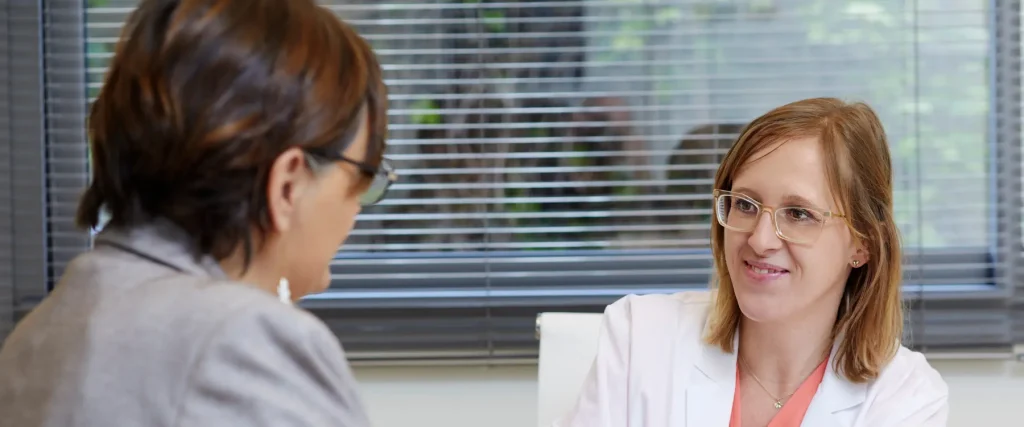
Is a woman considered less fit for motherhood because she seeks help with fertility treatment? Should she hide it? And is a man’s masculinity diminished because he has fertility problems? We spoke to Dr. Katharina Spies about why talking about infertility is so hard and the taboos that exist in our society around this matter.


- Coping with infertility
- Why is it so hard for us to talk about infertility?
- Emotional support in assisted reproduction
- Real opinions on assisted reproduction: stories that help you feel understood
- The taboo of infertility
- Frequently asked questions about assisted reproduction
- Our fertility treatments
- Where can I find Vida Fertility centres in Spain?
Coping with infertility

To cope with infertility, it is crucial to open up to honest conversations, either with family, friends or in support groups, where sharing experiences and feeling understood can ease the emotional burden.
Why is it so hard for us to talk about infertility?
Saying that in the 21st century it is still difficult to talk about assisted reproduction is a reality. The reasons are deeply rooted in religion or in the belief that parenthood is a natural process. When someone faces difficulties in conceiving, they may experience feelings of failure and diminished self-esteem.
The need to turn to assisted reproduction may make people question their gender identity, feeling less capable. In families or cultures where religious beliefs are prevalent, some people may face ethical and moral dilemmas regarding these methods.
In addition to this feeling of shame, the fear of being judged leads many people to keep their assisted reproduction process secret, intensifying the taboo surrounding infertility.
At Vida Fertility we offer emotional support during your fertility treatment for those seeking guidance and understanding on their path to parenthood.

Social stigmatisation
Social stigma around assisted reproduction is rooted in entrenched cultural perceptions and taboos that associate fertility with personal identity and worth. This stigma can lead to silence and shame among those seeking reproductive treatments, making it difficult to talk openly about their experiences. Prejudice and lack of public understanding of infertility and assisted reproduction contribute to negative perceptions, which heighten fear of judgement and social rejection, reinforcing the idea that these issues should be kept private.
False associations
Misguided associations between virility, motherhood and reproductive capacity arise from outdated cultural beliefs that directly link fertility to gender identity and role in society.
The pressure to adhere to these traditional roles can increase stress and anxiety, hindering open dialogue about options such as assisted reproduction.
Social pressure
Social pressure and expectations around reproduction often pose emotional challenges for individuals and couples facing fertility issues.
“Every day during consultations, we see how these cultural norms can profoundly influence our patients’ perceptions and emotional well-being,” adds Dr Katharina Spies.

Emotional support in assisted reproduction
Talking about assisted reproduction is not always easy. Sometimes it is difficult to put into words how we feel, explain what we are going through or find someone who really understands the process. That’s why emotional support in assisted reproduction can make all the difference: it provides a safe space to express fears, manage anxiety, make decisions more calmly and feel supported throughout the journey. At Vida Fertility, we understand that emotional well-being is also part of the treatment.
Real opinions on assisted reproduction: stories that help you feel understood

It is incredible how, from absolute resignation, these doctors have lifted my spirits. They got me pregnant and gave me my life back. They live up to their name.
I had to find a way to become a mother if I wanted to pursue my career and not settle for just any partner. I made the right choice.
From the very first moment I felt I was being listened to, understood, and above all, I felt that my treatment was finally going in the right direction.

Hello dear Mrs Ortega,
you and the whole team of Vida fertility make us so happy. Finally a relief that we can be helped! Many thanks to you and all the others for the great care and exceptional quality work. This high quality means a lot to us. We hope that in 2024 we can take a healthy baby full of love into our arms.❤️
Thanks to Dr. Kathi’s support and by following all her advice, the best moment of the treatment came: I got pregnant.
I didn’t know if I would ever be able to get pregnant and now I’m in my 5th month of pregnancy.
It hasn’t been an easy journey. After the second attempt, I am happy to say that in two months I will be meeting my little girl.
Being able to experience this shared motherhood has been a gift for the two of us.
THANK YOU to this great team for everything!
We highly recommend Vida Fertility to anyone who has already given up hope and wants to give it one last try.

A huge thank you to the entire Vida Fertility team, especially to Sophie and Dr. Spies, who helped us achieve the wonderful project of expanding our family. We met a very competent team who perfectly guided and advised us on the medical choices to make at each stage of our journey. 🫶
I recommend Vida Fertility for their professionalism, humanism, and availability.
Our wonderful baby is the proof that the results are there!
Thank you!
Thanks to Vida fertility, we are now mums. Mums!!
It’s the greatest gift of all, we’re so happy!
The good feeling will certainly have contributed to the success of the treatment.
When we first contacted the clinic, I didn’t expect to become a mum so quickly, and now I even have hope that we might be able to create a sibling for our son with the remaining blastocysts.
Thank you!

I chose Vida Fertility because it’s a clinic that offers human support from the very beginning. I’m convinced that my state of mind, so influenced by the unconditional support they gave me, was key to the success of my treatment.
At the first consultation, I felt heard, understood, and full of hope again. The final transfer, our last chance, took place in February 2024… and it worked. Our little girl has brought immense joy to our whole family.
Being a single parent brings challenges, but I’d recommend anyone thinking about it to go for it. Vida Fertility made my dream come true with my first IVF.
The taboo of infertility
As any other conditions such as diabetes or asthma, infertility should not be a cause for shame or guilt, nor should it need to be widely publicised. However, erroneous associations persist between fertility, virility in men and the social value of childbearing in women, contributing to stigmatisation.
“Despite advances in the acceptance of reproductive medicine, there is still much to be done to talk openly about infertility and assisted reproduction, underlining the importance of education and support on these issues,” says Dr Katharina Spies of Vida Fertility Madrid.
When in need of gamete donors, communicating this gently and honestly helps to normalise the process.

At Vida Fertility we are aware of the frustration that anyone who has gone / is going through a fertility treatment can feel, but that feeling does not define your value.
Whenever you are ready to see a fertility specialist, we will be at your entire disposal to provide you with the support you need.
Frequently asked questions about assisted reproduction
Advantages and disadvantages of assisted reproduction?
Dr Katharina Spies answers questions about the advantages and disadvantages of assisted reproduction:
Advantages of assisted reproduction: it offers a real chance of pregnancy to people with infertility issues and allows the treatment to be tailored to each individual’s personal, medical and emotional situation.
Disadvantages of assisted reproduction: it should be noted that starting assisted reproduction treatment does not guarantee pregnancy, can be emotionally draining and, in some cases, involves medication, check-ups and procedures that must be explained thoroughly before starting.
At Vida Fertility, we have a team of specialists in integrative medicine to assess your case on an individual basis.
How to talk about infertility with friends and family?
Dr Katharina Spies responds:
Talking about infertility with friends and family is not always easy, and you are not obliged to share everything. Many people prefer to share only part of the process, while others need to express themselves more in order to feel supported. The important thing is that you can decide who to talk to, how much you want to explain your situation and what you need at that moment: listening, respect, support or space. In addition, understanding how to approach fertility treatment as a couple can help you go through this process with more unity, more communication and more confidence when sharing it with others. When these conversations cause anxiety or frustration, having specialised emotional support can help you manage them better.
How do you tell your child that they were conceived through assisted reproduction?
Dr Katharina Spies replies:
It is best to talk about it naturally, honestly and in language appropriate to their age. Rather than treating it as a one-off or difficult conversation, it is usually better to integrate this story from childhood, so that the child feels it is a natural part of their life. In fact, some resources such as books on egg donation and assisted reproduction can be very helpful in accompanying this conversation with sensitivity and in a more natural way.
Articles that might be of your interest:





Ask for a consultation
You may also like


Last news


Testimonials



Where can I find Vida Fertility centres in Spain?

📍 C/ Palermo 15, Hortaleza, 28043 Madrid
📞 Phone number: +34 919 29 83 23
🕒 Opening hours: Monday to Friday from 8am to 7pm
📍 Av. Óscar Esplá 1, Bajo, 03008 Alicante
📞 Phone number: +34 919 29 83 23
🕒 Opening hours: Monday to Friday from 8am to 7pm
ℹ️ The information published on Vida Fertility is reviewed by our fertility specialists and medical team, following up-to-date scientific criteria and evidence-based medicine. Our team is a member at scientific societies such as SEF, ESHRE and SEGO.