
 Español
  Français
  Deutsch
  Italiano
  Nederlands
  International
Assisted Reproduction in Spain: Regulations, Options and Success Rates

Spain has established itself as a leading destination in Europe for assisted reproduction treatments, attracting patients from all over the world thanks to the quality and innovation of its medical services.
Spain not only offers advanced techniques and favourable legislation in the field of fertility, but also has highly qualified specialists and the best fertility clinics.
The combination of these factors has made Spain an ideal place for those seeking to fulfil their dream of becoming parents.
Or becoming singles mother at 40?
Below, we spoke to medical director Dr Katharina Spies about how Assisted Reproduction works in Spain, regulations and the treatment options available at Vida Fertility.


- What is Assisted Reproduction?
- Law 14/2006: Assisted Reproduction Law in Spain
- Women’s rights in assisted reproduction
- Assisted Reproduction Regulations in Spain
- Causes of infertility in Spain
- Fertility Treatment Options in Spain
- Advanced Technologies and Techniques in Spain
- How to choose the right fertility clinic
- Testimonials and Experiences at Vida Fertility
What is Assisted Reproduction?
Assisted reproduction is a set of medical techniques and treatments designed to help couples and single women who face difficulties in conceiving naturally.
This field of medicine focuses on identifying and treating infertility problems through interventions that can range from hormone treatments to more complex procedures such as in vitro fertilisation (IVF) and PGT-A.
Law 14/2006: Assisted Reproduction Law in Spain
In assisted reproduction, clinical practice and innovation are advancing at a dizzying pace, often ahead of regulatory frameworks. Therefore, having legislation that evolves and covers new scenarios is key to ensuring that techniques can be applied with legal certainty, ethical guarantees and real protection for patients and future offspring.
In Spain, this role is fulfilled by Law 14/2006 on Assisted Human Reproduction Techniques, considered one of the most open and comprehensive frameworks in Europe. This law defines which treatments can be performed, how healthcare personnel should act, and what limits and controls are established to preserve rights and well-being. Thanks to this legal basis, Spain has been able to incorporate many advances in reproductive medicine at an early stage, which has boosted the international prestige of its specialised centres.
Women’s rights in assisted reproduction
In Spain, any woman over the age of 18 with full legal capacity can access the assisted reproduction techniques regulated by law without her marital status or sexual orientation being an exclusionary requirement. This means that single women, heterosexual or homosexual couples, married or unmarried, can all be users, provided they meet the medical criteria and comply with the current legal framework.
Furthermore, access to these techniques is not limited solely to situations of diagnosed infertility. The law also allows assisted reproduction to be used as part of personal reproductive planning, for example, in single motherhood projects or when deciding to postpone motherhood by preserving fertility with one’s own eggs through vitrification or social freezing.
Assisted Reproduction Regulations in Spain
Spanish legislation, through Law 14/2006, establishes a progressive framework in comparison with other European legal systems, standing out both for the techniques allowed and their accessibility to different groups.
Any woman over the age of 18, with full legal capacity, can use the assisted reproduction techniques offered by the law, without discrimination based on marital status or sexual orientation.
This includes single women who want to become mothers by choice, same-sex couples who want to carry out the ROPA-Method and unmarried couples, allowing not only infertility treatment but also personal reproductive planning, such as the preservation of motherhood by freezing or vitrification of oocytes.
Three fundamental aspects of the Spanish legislation are the ropa technique, the anonymity of donors and the age limit for receiving treatment.
| European Regulations on Assisted Reproduction | Treatment for Single Women and Ropa | Sperm Donation | Egg Donation | Donor Anonymity | Pre-implantation Genetic Diagnosis (PGD) | Embryo Adoption | Post-Mortem Fertilization | Sex Selection |
|---|---|---|---|---|---|---|---|---|
| Spain | Yes | Yes | Yes | Yes | Yes | Yes | Yes | Yes* |
| France | Yes | Yes | Yes | No | Yes | Yes | No | No |
| Germany | No | Yes | No | No | No | Yes | No | No |
| Italy | No | Yes | Yes | Yes | Yes | No | No | No |
| United Kingdom | Yes | Yes | Yes | Yes | Yes | No | No | Yes* |
| Ireland | Yes | Yes | Yes | No | Yes | Yes | No | No |
| Netherlands | Yes | Yes | Yes | No | Yes | Yes | No | No |
* Only in cases of sex-linked hereditary diseases.
Predicting egg quality
At Vida Fertility, we have innovative technology that is changing the way eggs are vitrified. It is called VIOLET™, an artificial intelligence system designed to assess the quality of oocytes before freezing.
Using advanced algorithms, VIOLET™ examines images of each egg individually and estimates its reproductive capacity. This method, which is completely non-invasive and trained with a large volume of data, allows us to predict the probability of fertilisation and its development to the blastocyst stage with great accuracy.
Legal framework of the Ropa method in Spain
Currently, although it is not explicitly contemplated in the Law, the ROPA method or partner oocyte reception is accessible in Spain.
The Ropa method in Spain allows two women, united in marriage, to actively participate in the process of conception and gestation: one donates the eggs, which are fertilised with sperm from an anonymous donor, and the other carries out the gestation.
Both, after giving their informed consent, play different roles: one as the biological mother and the other as the gestational mother. Since 2007, Spanish legislation has recognised dual motherhood in same-sex couples, allowing both partners to be legally recognised as mothers of children born through this technique.
Anonymity of Donors
In Spain, the law guarantees complete anonymity of gamete and embryo donors. This means that neither the recipients nor the children born through assisted reproduction techniques can know the identity of the donor.
This policy contrasts with countries such as the UK and Ireland, where children born to donors are allowed access to information about the donor when they reach the age of majority.
Age Limit for Treatments
Spanish legislation does not specify a strict age limit for receiving fertility treatments. However, clinical practice generally advises an age limit of around 50 years for women, taking into account health and welfare considerations for both the mother and the future baby.
This is more permissive compared to other countries such as Germany and Italy, where restrictions may be stricter or legislation more limiting.
Causes of infertility in Spain
According to data provided by the WHO, in Spain approximately 15-20% of Spanish couples of reproductive age face difficulties in conceiving.
The factors behind infertility can be varied, affecting both men and women, and even, in some cases, the cause may be infertility of unknown origin.
In addition, more and more single women and female couples are turning to assisted reproduction to achieve pregnancy, using donor sperm.
Fertility Treatment Options in Spain
In Spain, and specifically at Vida Fertility, we have a wide range of fertility treatment options in the field of assisted reproduction, designed to suit different needs and circumstances.
In Vitro Fertilisation (IVF)
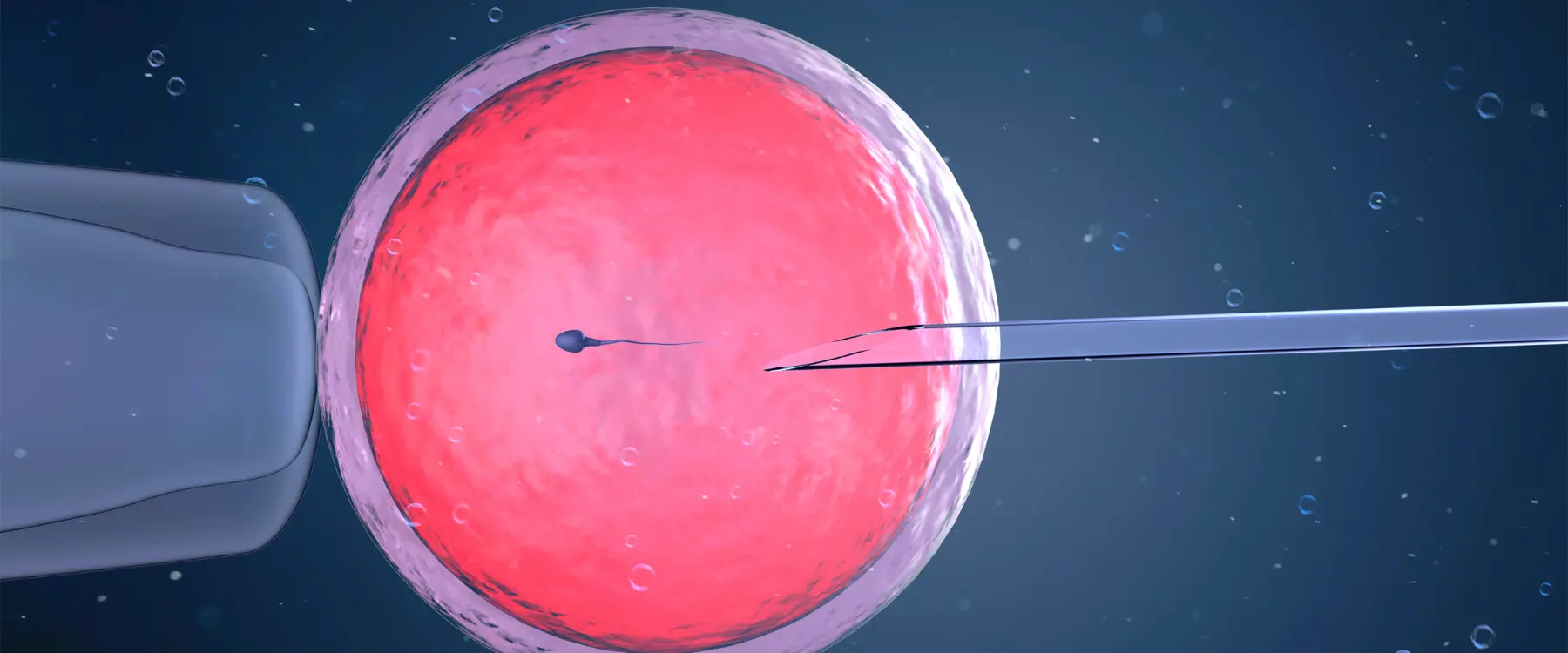
This procedure involves the retrieval of eggs which are then fertilised in the laboratory with sperm. It is ideal for couples with fertility problems unresolved by other methods.
At Vida Fertility, we use the ICSI (Intracytoplasmic Sperm Injection) technique to improve fertilisation rates.
Artificial Insemination (AI)
This is a less invasive technique where the sperm, after being prepared in the laboratory, is introduced directly into the uterus. This option is suitable for mild fertility problems or when the cause of infertility is unclear
Egg donation or IVF with donor eggs
For women who cannot use their own eggs, we offer treatment using donor eggs. This option is also relevant for same-sex couples and single women. Anonymus egg donation in Spain.
ROPA Method
Especially for female couples, it allows both to actively participate in the conception process; one provides the eggs and the other gestate the baby.
Fertility Preservation or egg freezing
We offer egg freezing for those who wish to postpone motherhood for personal or medical reasons.
Advanced Technologies and Techniques in Spain
At Vida Fertility, we pride ourselves on using cutting-edge technology and innovative techniques to increase the chances of success of our treatments.
Allows continuous monitoring of embryo development, selecting the embryos with the highest potential.
Endometrial Immunology and Receptivity
Detects genetic abnormalities before implantation to increase the chances of a healthy pregnancy.
For cases of very low sperm count, we retrieve sperm directly from testicular tissue.
Our goal at Vida Fertility is to offer you the best personalised care and the most advanced treatment options in assisted reproduction.
Request a consultation for more information and to find out how we can help you on your path to motherhood.
How to choose the right fertility clinic
If you have been trying to conceive for more than a year without success (or six months if you are over 35), it may be the right time to consult a fertility specialist.
When selecting a fertility clinic in Spain, there are several crucial factors to consider to ensure you receive the best possible care.
Here are some of the most important aspects:
- Success Rates
- Experience of the Medical Team
- Advanced Technology and Techniques
- Personalisation of Treatment
- Patient Care
- Opinions and Recommendations
- Price Transparency
- Accessibility and Location
- Legal and Ethical Support
- Age limit for fertility treatment in Spain
These factors will help you choose a fertility clinic in Spain that not only increases your chances of success, but also provides support and care throughout the process.
Testimonials and Experiences at Vida Fertility

It is incredible how, from absolute resignation, these doctors have lifted my spirits. They got me pregnant and gave me my life back. They live up to their name.
I had to find a way to become a mother if I wanted to pursue my career and not settle for just any partner. I made the right choice.
From the very first moment I felt I was being listened to, understood, and above all, I felt that my treatment was finally going in the right direction.

Hello dear Mrs Ortega,
you and the whole team of Vida fertility make us so happy. Finally a relief that we can be helped! Many thanks to you and all the others for the great care and exceptional quality work. This high quality means a lot to us. We hope that in 2024 we can take a healthy baby full of love into our arms.❤️
Thanks to Dr. Kathi’s support and by following all her advice, the best moment of the treatment came: I got pregnant.
I didn’t know if I would ever be able to get pregnant and now I’m in my 5th month of pregnancy.
It hasn’t been an easy journey. After the second attempt, I am happy to say that in two months I will be meeting my little girl.
Being able to experience this shared motherhood has been a gift for the two of us.
THANK YOU to this great team for everything!
We highly recommend Vida Fertility to anyone who has already given up hope and wants to give it one last try.

A huge thank you to the entire Vida Fertility team, especially to Sophie and Dr. Spies, who helped us achieve the wonderful project of expanding our family. We met a very competent team who perfectly guided and advised us on the medical choices to make at each stage of our journey. 🫶
I recommend Vida Fertility for their professionalism, humanism, and availability.
Our wonderful baby is the proof that the results are there!
Thank you!
Thanks to Vida fertility, we are now mums. Mums!!
It’s the greatest gift of all, we’re so happy!
The good feeling will certainly have contributed to the success of the treatment.
When we first contacted the clinic, I didn’t expect to become a mum so quickly, and now I even have hope that we might be able to create a sibling for our son with the remaining blastocysts.
Thank you!

I chose Vida Fertility because it’s a clinic that offers human support from the very beginning. I’m convinced that my state of mind, so influenced by the unconditional support they gave me, was key to the success of my treatment.
At the first consultation, I felt heard, understood, and full of hope again. The final transfer, our last chance, took place in February 2024… and it worked. Our little girl has brought immense joy to our whole family.
Being a single parent brings challenges, but I’d recommend anyone thinking about it to go for it. Vida Fertility made my dream come true with my first IVF.
Ask for a consultation
You may also like


Last news


Testimonials




ℹ️ The information published on Vida Fertility is reviewed by our fertility specialists and medical team, following up-to-date scientific criteria and evidence-based medicine. Our team is a member at scientific societies such as SEF, ESHRE and SEGO.