
 Español
  Français
  Deutsch
  Italiano
  Nederlands
  International
How long will it take me to get pregnant with IVF? Dr Spies answers

When someone starts to consider in vitro fertilisation (IVF) it is usually after trying for months (sometimes years), going through tests and miscarriages, hearing “it’ll happen eventually” and experiencing that strange feeling of wanting to get your hopes up… but being afraid to do so too much.
If you’re reading this, you’re probably familiar with that mix of hope and anxiety: wanting a baby, yet at the same time wondering whether IVF will work for you, how long it will take, and what happens if it doesn’t work first time.
IVF is one of the most effective techniques in assisted reproduction, but pregnancy doesn’t always happen on the first attempt because many factors come into play: female fertility and age, diagnosis, embryo quality, the endometrium and the personalised medical protocol for your case.
To clear up all these doubts, we spoke to Dr Katharina Spies, medical director and gynaecologist specialising in assisted reproduction at Vida Fertility, about how long it takes to get pregnant with IVF, what the actual chances are and what to look into when implantation fails.


- What is IVF and how can it help you get pregnant
- When is a pregnancy test reliable following IVF?
- What are the chances of getting pregnant with IVF?
- What you can do to increase your chances of getting pregnant
- Common concerns and frequently asked questions about how long it takes to get pregnant with IVF and the chances of pregnancy
- Our fertility treatments
- Where can I find Vida Fertility centres in Spain?
What is IVF and how can it help you get pregnant
In vitro fertilisation (IVF) is an assisted reproduction technique that involves bringing the egg and sperm together in the laboratory, outside the woman’s body, to create an embryo that is subsequently transferred to the uterus.
This process increases the chances of pregnancy because we control every key stage of fertilisation and embryo development, optimising conditions that might naturally fail.
There are two ways to carry out fertilisation:
- Conventional IVF, where the egg and sperm are placed in a Petri dish so that fertilisation occurs spontaneously.
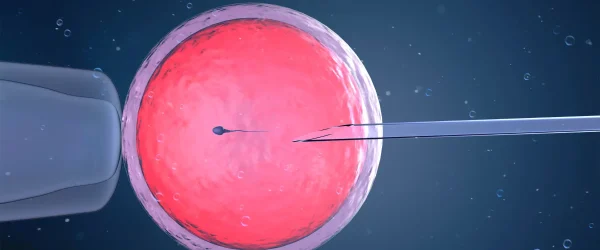
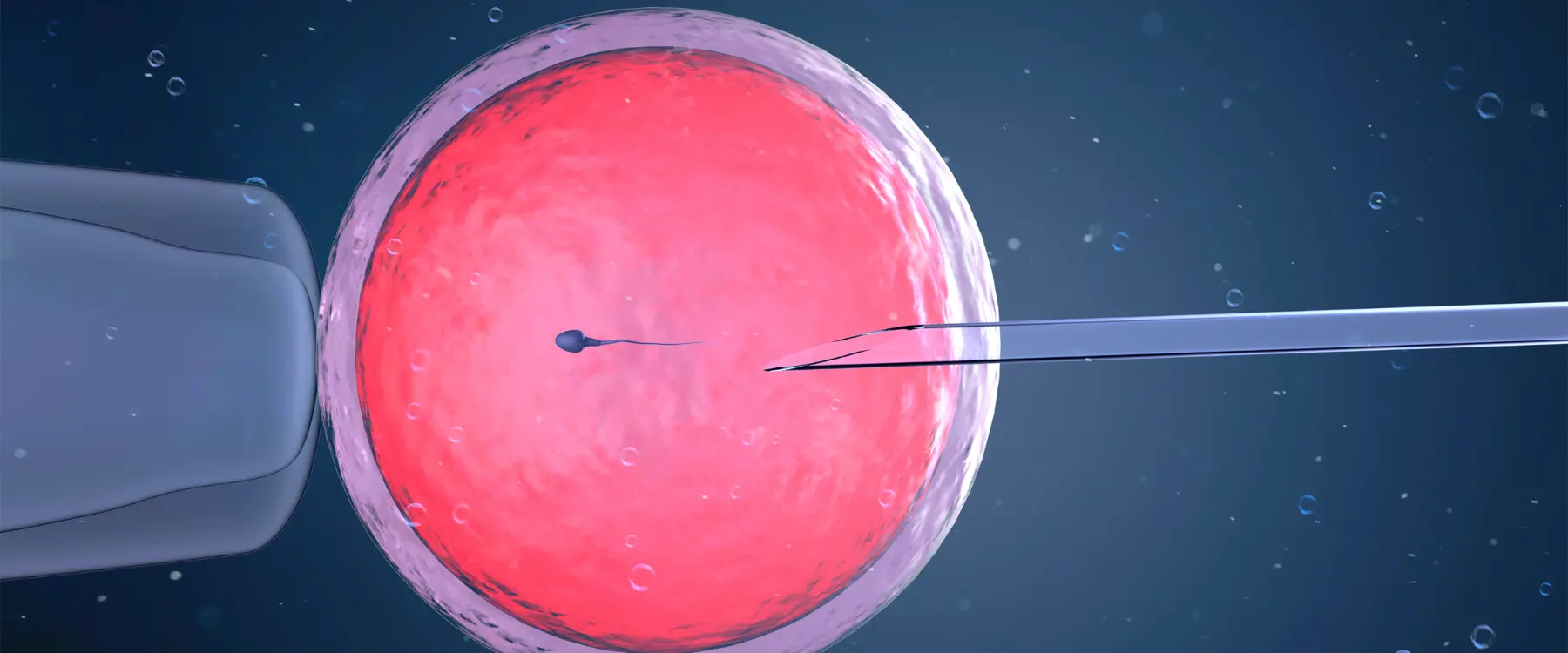
- ICSI (intracytoplasmic sperm injection), as shown in the video, ICSI is a more precise technique in which a single sperm is directly injected into the egg, increasing fertilisation rates in many cases.
The IVF process involves several steps:
- Ovarian stimulation to obtain several eggs in a single cycle
- Laboratory fertilisation using conventional IVF or ICSI
- Embryo selection and culture over several days until the blastocyst stage
- Embryo transfer to the uterus, where it can implant and lead to pregnancy
Thanks to IVF, at Vida Fertility we can help couples or women with low ovarian reserve, sperm abnormalities or disorders, or difficulties conceiving naturally to achieve pregnancy.
How long does IVF take?
The answer depends on whether you are having a fresh transfer (in the same cycle) or a delayed transfer (using a frozen embryo in a later cycle).
Furthermore, according to our Dr Katharina Spies: “In vitro fertilisation treatment generally takes between 3 and 5 weeks, starting from ovarian stimulation up to the time of embryo transfer.
However, the duration may vary depending on each patient’s individual response to treatment, the tests required, and the coordination between the medical team and the patients”.
Differences between fresh and frozen embryo transfer
The main difference lies in when the embryo is transferred to the uterus.
Fresh embryo transfer
The embryo is transferred during the same cycle in which the ovaries have been stimulated and fertilisation has taken place. This is the option we recommend when the endometrium is in optimal condition for implantation.
Delayed transfer or frozen embryos
Sometimes it is advisable to freeze embryos and transfer them in a different cycle. This may be recommended if:
- The endometrium is not optimal in that cycle,
- There is a risk of hyperstimulation,
- Or we wish to better time the transfer.
Nowadays, thanks to vitrification, both options have high success rates, and the choice depends mainly on achieving the best time for the endometrium to be receptive.
When is a pregnancy test reliable following IVF?
When embryo transfer takes place on day 5, at the blastocyst stage, the pregnancy test (which involves measuring the b-HCG hormone in the blood) is scheduled for 10–12 days after the transfer. This period is known as the beta wait, which spans from the transfer until the pregnancy test is carried out.
Therefore, to obtain accurate results from the pregnancy test, it is advisable to wait at least 15 days, to avoid false positives or negatives due to insufficient hormone levels.
If you’d like to know when it’s best to transfer on day 3 or day 5, we’ve written a blog post with all the information; you can read it by clicking this button:
What are the chances of getting pregnant with IVF?
The success rate of IVF treatment depends on each patient’s individual circumstances. However, by carrying out the relevant diagnostic tests and ensuring proper follow-up, these success rates can be achieved with in vitro fertilisation.
What you can do to increase your chances of getting pregnant
Although there are habits we can incorporate into our daily lives, as fertility experts, we must emphasise the importance of undergoing the necessary fertility tests before starting IVF.
A comprehensive fertility assessment could be the key to you becoming a mum in as few attempts as possible. For this reason, Dr Spies recommends:
- A healthy lifestyle, paying attention to your diet and avoiding tobacco and alcohol
- Reducing stress and improving sleep quality
- Following the medical protocol agreed with your doctor
- General health and hormonal assessment
- Pre-treatment fertility tests: ovarian reserve, semen analysis, etc.
Common concerns and frequently asked questions about how long it takes to get pregnant with IVF and the chances of pregnancy
How long will it take me to get pregnant with IVF?
Dr Katharina Spies replies:
If we perform IVF with fresh embryo transfer, many patients reach the pregnancy test stage within about 2–3 weeks of the start of stimulation.
If we decide to freeze embryos and transfer them in a later cycle, the process takes longer because we need to prepare the endometrium in another cycle.
What are the chances of getting pregnant with IVF?
Dr Katharina Spies replies:
The chances of getting pregnant with IVF depend on each individual case. They depend on age, diagnosis, embryo quality, the endometrium and the fertility treatment carried out.
Would you like to know your chances on the first attempt? Book your appointment now with our specialists.
Is it possible to get pregnant with IVF on the first attempt?
Dr Katharina Spies replies:
Yes, it is possible to get pregnant with IVF on the first attempt. But it is important to understand that IVF depends on various factors, including the woman’s age, egg and sperm quality, embryo development, the condition of the endometrium, the uterine cavity, and many others.
At Vida Fertility, we combine the expertise of our reproductive medicine specialists with cutting-edge technology. All this, together with genuine support, makes it possible to maximise your chances on the first attempt.
How many IVF attempts does it take to get pregnant?
Dr Katharina Spies answers:
This is one of the most frequently asked questions in consultations, and the reality is that there is no exact number, as success depends on several key factors at each stage of treatment.
Generally speaking, many specialists put the average at between 3 and 4 IVF cycles, although this depends on each patient’s individual progress.
Rather than the number of attempts, what is important is to analyse what happens at each stage of the process:
- Response to ovarian stimulation and egg maturity
- Embryonic development.
- Endometrial conditions.
- Endometrial receptivity.
Furthermore, it is important to bear in mind that a single stimulation cycle can result in several embryo transfers, thanks to embryo vitrification, which increases the cumulative chances of pregnancy without the need to repeat the entire process from the start.
When pregnancy is not achieved after several attempts, the specialist may recommend changing the treatment, such as adjusting the protocol or resorting to egg donation or double gamete donation.
Why am I not getting pregnant with IVF if the embryos were “good”?
Dr Katharina Spies replies:
The first thing you should know is that the success of IVF does not depend solely on the embryo. Other important factors also play a part:
- The endometrium, which must be receptive at exactly the right moment (what we call the implantation window).
- Possible uterine abnormalities or inflammations such as endometritis.
- Immunological factors, which can hinder implantation.
- Even aspects such as lifestyle, which also have a greater influence than we realise.
Therefore, when IVF does not work despite having good-quality embryos, it does not mean there is no solution. On the contrary, it is a sign that we need to look more closely at the case and adjust our strategy: from performing IVF with PGT-A to genetically analyse the embryos (PGT-A) to assessing endometrial receptivity.
What happens if I take a test too early and it comes back negative?
Dr Katharina Spies replies:
It could be a false negative. If the test is taken too early, the pregnancy hormone may not yet be detectable. That is why we strongly recommend taking the pregnancy test for the b-HCG hormone in the blood 10–12 days after the transfer.
Failed IVF: what is usually the next step?
Dr Katharina Spies replies:
Following a negative IVF result, the next step is to analyse the cycle in detail and decide whether to adjust the medical protocol, consider a delayed transfer, check the uterus/endometrium if indicated, and decide on the strategy that maximises your chances without wasting time.
In fact, after several IVF attempts, the specialist may recommend resorting to egg donation or double gamete donation.





Ask for a consultation
You may also like



Last news


Testimonials






Where can I find Vida Fertility centres in Spain?
📍 C/ Palermo 15, Hortaleza, 28043 Madrid
📞 Phone number: +34 919 29 83 23
🕒 Opening hours: Monday to Friday from 8am to 7pm
📍 Av. Óscar Esplá 1, Bajo, 03008 Alicante
📞 Phone number: +34 919 29 83 23
🕒 Opening hours: Monday to Friday from 8am to 7pm
ℹ️ The information published on Vida Fertility is reviewed by our fertility specialists and medical team, following up-to-date scientific criteria and evidence-based medicine. Our team is a member at scientific societies such as SEF, ESHRE and SEGO.