
 Español
  Français
  Deutsch
  Italiano
  Nederlands
  International
Genetic grief: a guide to cope with egg donation

Genetic grief describes the emotional process that some people experience when facing assisted reproduction treatments, such as egg donation, where there is no direct genetic connection with the future baby.
This grief is a natural part of the journey to parenthood for many couples, marked by the acceptance that the path to having a child may differ from initial expectations. We spoke to Dr Elena Santiago about genetic grief in oocyte donation and sperm donor IVF and in which countries ovodonation is allowed.

What is genetic mourning in oocyte donation?
Genetic duel in the context of assisted reproduction refers to the emotional process that individuals or couples go through when accepting that their future child will not share their genes, a common situation in treatments such as egg donation or IVF with sperm donor.
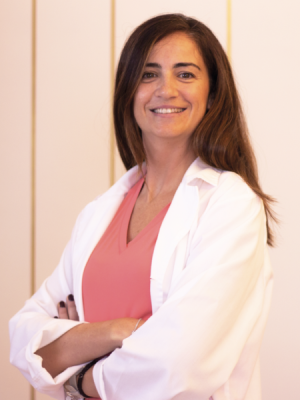
As a fertility specialist in Spain, Dr. Santiago adds that “Recognising and validating these feelings is crucial, and with adequate professional and emotional support, couples can go through this process, opening their hearts to the possibilities that ovodonation offers to create a family”.

Overcoming genetic grief before the process and after treatment can take time, in fact, from experience in the fertility clinic, the support of family and professionals is crucial.
Overcoming genetic grief is possible
Strategies and coping with genetic grief
- Self-care: Maintain mental and physical health through healthy habits and stress reduction activities.
- Acknowledge and Accept Feelings: It is essential to recognise and accept any sadness, frustration, fear or anger as normal reactions.
- Seek Support: Lean on friends, family or professionals to process these feelings.
- Be informed: Understanding the process of gamete donation can reduce anxiety.
- Expert Counselling: Consult experts for a thorough understanding of the process and expectations.
- Participate in Support Groups: Connecting with others in similar situations can offer comfort and understanding.
- Communication with Partner: Maintaining open and honest communication is crucial to the emotional well-being of both partners.

Opting for IVF with donor eggs or sperm represents a solution for those seeking to become parents, although it entails significant emotional challenges. Sharing your concerns and fears with experts, communicating effectively with your partner and reflecting on your motivations for becoming a mother are essential to process these feelings and get excited about the idea of motherhood again.
How to cope with fertility treatment as a couple
Coping with fertility treatment as a couple is not just a medical matter. In our practice, we often see how the emotional impact can be just as significant as the fertility treatment itself.
As we have already mentioned, the key to coping with genetic grief or fertility treatment is communication within the couple. Sharing your fears helps your partner to understand your feelings and emotions; “what we don’t communicate doesn’t exist”, says Dr Santiago, so making time to talk, time to spend together as a couple, and making plans for both of you, helps to improve communication between you.
Supporting your partner means being there for them, asking how they’re feeling, expressing your own fears too, and maintaining a mutual commitment throughout every stage of the treatment. It’s not about doing everything perfectly, but about remembering that you’re both on the same team.
Is egg donation worth it?
Egg donation does not instantly eliminate genetic grief. It is normal to need time to accept that the path to motherhood will be different from what you imagined. But for many patients, that grief gradually transforms as they come to understand that the bond with their baby does not depend solely on genetics, but also on epigenetics, pregnancy, care, presence and love.
The testimonials from women and couples who have undergone egg donation often agree on something very important: the hope of being able to carry a child, care for them and build a family of their own. Therefore, rather than simply asking ourselves whether it is “worth it”, we must also ask whether this treatment can bring us closer to the life we desire.
From a medical and emotional perspective, egg donation can be a real opportunity for patients with low ovarian reserve, poor egg quality, advanced maternal age and fertility, or a history of failed IVF treatments. However, each case must be assessed on an individual basis. The important thing is that no patient feels she is giving up on becoming a mother, but rather that she is finding a possible and safe way to achieve it.
Testimonials from patients who have had children through egg donation

It is incredible how, from absolute resignation, these doctors have lifted my spirits. They got me pregnant and gave me my life back. They live up to their name.
I had to find a way to become a mother if I wanted to pursue my career and not settle for just any partner. I made the right choice.
From the very first moment I felt I was being listened to, understood, and above all, I felt that my treatment was finally going in the right direction.

Hello dear Mrs Ortega,
you and the whole team of Vida fertility make us so happy. Finally a relief that we can be helped! Many thanks to you and all the others for the great care and exceptional quality work. This high quality means a lot to us. We hope that in 2024 we can take a healthy baby full of love into our arms.❤️
Thanks to Dr. Kathi’s support and by following all her advice, the best moment of the treatment came: I got pregnant.
I didn’t know if I would ever be able to get pregnant and now I’m in my 5th month of pregnancy.
It hasn’t been an easy journey. After the second attempt, I am happy to say that in two months I will be meeting my little girl.
Being able to experience this shared motherhood has been a gift for the two of us.
THANK YOU to this great team for everything!
We highly recommend Vida Fertility to anyone who has already given up hope and wants to give it one last try.

A huge thank you to the entire Vida Fertility team, especially to Sophie and Dr. Spies, who helped us achieve the wonderful project of expanding our family. We met a very competent team who perfectly guided and advised us on the medical choices to make at each stage of our journey. 🫶
I recommend Vida Fertility for their professionalism, humanism, and availability.
Our wonderful baby is the proof that the results are there!
Thank you!
Thanks to Vida fertility, we are now mums. Mums!!
It’s the greatest gift of all, we’re so happy!
The good feeling will certainly have contributed to the success of the treatment.
When we first contacted the clinic, I didn’t expect to become a mum so quickly, and now I even have hope that we might be able to create a sibling for our son with the remaining blastocysts.
Thank you!

I chose Vida Fertility because it’s a clinic that offers human support from the very beginning. I’m convinced that my state of mind, so influenced by the unconditional support they gave me, was key to the success of my treatment.
At the first consultation, I felt heard, understood, and full of hope again. The final transfer, our last chance, took place in February 2024… and it worked. Our little girl has brought immense joy to our whole family.
Being a single parent brings challenges, but I’d recommend anyone thinking about it to go for it. Vida Fertility made my dream come true with my first IVF.






Learn about the requirements for egg donation treatment in Spain: age, indications, medical tests and documentation needed to begin treatment.

Find out about the requirements for egg donation in Spain: age, health, medical tests, the process and what the law says. Get answers to your questions and book an information appointment at Vida Fertility.

Getting pregnant through egg donation offers the highest probability for women over 40. We explain the process, donor selection and success rates.
Vida Fertility Events
At Vida Fertility, we believe that feeling informed is the first step towards a more confident fertility journey.
Through our events, talks and private consultations, we help patients understand their options, ask questions and receive personalised guidance from our fertility specialists in Spain.
Discover our upcoming events and meet the Vida Fertility team.
Ask for a consultation
You may also like


Last news


Testimonials


The best fertility clinics in Spain
📍 C/ Palermo 15, Hortaleza, 28043 Madrid
📞 Phone number: +34 919 29 83 23
🕒 Opening hours: Monday to Friday from 8am to 7pm
📍 Av. Óscar Esplá 1, Bajo, 03008 Alicante
📞 Phone number: +34 919 29 83 23
🕒 Opening hours: Monday to Friday from 8am to 7pm
ℹ️ The information published on Vida Fertility is reviewed by our fertility specialists and medical team, following up-to-date scientific criteria and evidence-based medicine. Our team is a member at scientific societies such as SEF, ESHRE and SEGO.