
 Español
  Français
  Deutsch
  Italiano
  Nederlands
  International
Are you thinking of freezing your eggs? Here are the tests you should have done beforehand

Before starting treatment to freeze eggs, it is important to assess each woman’s ovarian reserve and reproductive health.
In this article, Dr Katharina Spies explains the key tests carried out before egg freezing, what information ultrasound scans and hormone tests provide, and why these results are essential for designing a personalised stimulation programme.
She also explains the importance of age, what happens when ovarian reserve declines, and when this treatment is available at a private clinic or through the public health service.


What is egg freezing and what does it involve?
Egg freezing, also known as oocyte vitrification, is a fertility preservation technique that allows eggs to be stored for future use. The aim is to maintain the characteristics they had at the time of freezing, although the treatment does not guarantee a subsequent pregnancy.
The process of freezing eggs involves ovarian stimulation, ultrasound scans, the retrieval of oocytes via ovarian puncture, and their vitrification in the laboratory.
Before beginning, it is essential to undergo a medical assessment and various tests prior to freezing the eggs.

What tests are carried out before freezing eggs?
Not all women require exactly the same fertility test. Age, medical history, menstrual regularity and the presence of conditions such as endometriosis may make it necessary to carry out further tests.
Initial fertility consultation
The assessment begins with a clinical interview. Before ordering any tests, we need to understand why you wish to preserve your fertility and what your personal and medical circumstances are.
During this initial consultation, we will review:
- Your age.
- The regularity and duration of your menstrual cycles.
- Your gynaecological and reproductive history.
- Any previous surgery on the ovaries.
- Endometriosis, cysts, fibroids or other uterine pathologies.
- Previous or current medical treatments.
- Family history of early menopause.
- Medication, allergies and conditions such as hyperthyroidism.
- Results of any recent tests.
It is also important to know when you would like to start and whether there are any medical or professional circumstances that might affect the timing. With this information, we can decide which tests you need and avoid repeating tests that are still valid.
Transvaginal ultrasound and antral follicle count
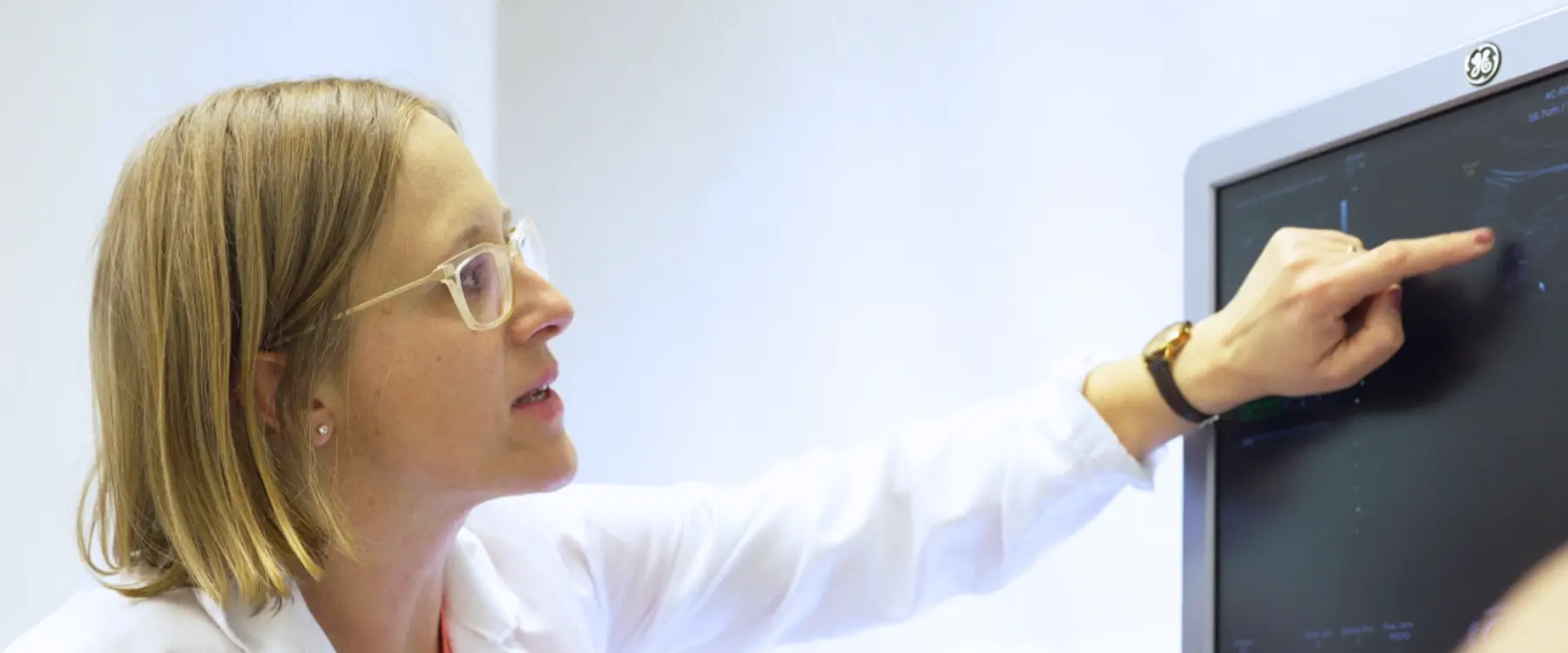
At the first consultation, we can already carry out a transvaginal ultrasound, which allows us to examine the uterus and ovaries. During the scan, we count the antral follicles – small ovarian structures containing immature oocytes that can be seen at the start of the cycle.
The count helps to estimate ovarian reserve and the likely response to medication. It also enables us to detect findings that could influence treatment, such as:
- Ovarian cysts.
- Endometriomas.
- Uterine fibroids.
- Anatomical abnormalities.
- Ovaries that are difficult to access for aspiration.
- Signs consistent with polycystic ovary syndrome (PCOS).
Analysis of anti-Müllerian hormone
Anti-Müllerian hormone (AMH) is one of the most commonly used markers for estimating ovarian reserve. Its level helps to predict whether the response to stimulation is likely to be low, normal or high.
This information enables us to determine the initial dose of medication and adjust expectations regarding the likely number of follicles.
However, it is worth clarifying a point that often causes confusion:
AMH levels vary from woman to woman; AMH provides information on the estimated number of oocytes and, together with the antral follicle count, allows us to predict their quality.
Hormone profile
Depending on the individual case, we may request further hormone tests relating to ovarian function, such as:
- FSH.
- LH.
- Oestradiol.
- Progesterone.
- TSH to assess thyroid function.
- Prolactin when clinically indicated.
FSH, LH and oestradiol are usually interpreted taking into account the stage of the menstrual cycle. Not all of these tests are essential for every patient.
For example, in cases of irregular cycles, amenorrhoea or when there are conflicting results between AMH and ultrasound, the hormonal profile can help us to better understand ovarian function.
Serological tests prior to egg vitrification
These usually include serological tests for HIV and hepatitis B and C, although the exact tests carried out depend on the current protocol and the clinical situation.
These tests do not assess ovarian reserve. Their purpose is to ensure safety during the processing and storage of samples in the laboratory.
Pre-operative blood tests and assessment of sedation
Oocyte retrieval is carried out by means of follicular aspiration, generally under sedation. For this reason, pre-operative tests may be requested prior to the procedure, including:
- Complete blood count.
- Coagulation profile.
- Basic biochemistry.
- Anaesthetic assessment.
- Electrocardiogram where indicated.
The tests required will depend on the patient’s age, medical history, the type of sedation and the centre’s protocol.
Frequently asked questions about tests prior to egg freezing
Dr Katharina Spies, medical director at Vida Fertility Madrid, replies:
At what point in the cycle are the tests carried out?
AMH can usually be measured at different points in the cycle. The antral follicle count and certain hormones, such as FSH and oestradiol, are generally best interpreted at the start of menstruation. The specialist will advise when to carry out each test.
Why is age so important before freezing eggs?
Ovarian reserve and oocyte quality are not the same thing.
Ovarian reserve relates mainly to the approximate number of available oocytes and the expected response to stimulation. Oocyte quality is particularly associated with age.
As the years go by, the likelihood of oocytes having chromosomal abnormalities increases. Therefore, even if a patient has an adequate AMH level, preserving eggs at a younger age usually offers a more favourable starting point than doing so later.
There is no single ‘perfect’ age that applies to all women. At Vida Fertility, we recommend considering vitrification preferably before the age of 35, although it may be considered later depending on ovarian reserve and the individual’s circumstances.
Can I freeze my eggs in Spain through the National Health Service?
No. The National Health Service’s standard coverage provides for the preservation of gametes primarily where there is a risk of infertility associated with gonadotoxic treatments or certain medical conditions. It does not, as a general rule, cover vitrification requested solely to delay motherhood.
Therefore, the difference between the National Health Service and a private clinic is:
- In a private clinic: the procedure can be carried out on the basis of a personal decision following the relevant medical assessment.
- In the public health system: a medical indication is usually required, and the established criteria must be met.
In both cases, the treatment must be carried out at an authorised centre and with the relevant informed consent.
Can I bring test results from another clinic?
Yes. At Vida Fertility, during your first consultation, you can bring along any previous ultrasound scans, blood tests and reports. The team will check the date, content and validity of these to decide whether they can be used or whether any tests need to be repeated.
Does a low ovarian reserve prevent me from freezing eggs?
Not always. It may mean that we expect to retrieve fewer oocytes and that it may be necessary to consider more than one stimulation cycle. The recommendation will also depend on the patient’s age, follicular count and reproductive goal.

Would you like to know if now is a good time to freeze your eggs?
At Vida Fertility, we assess your ovarian reserve and medical history to advise you on the tests you need and design a personalised treatment plan.Book your first consultation and find out about your options for preserving your fertility.






Vida Fertility Events
At Vida Fertility, we believe that feeling informed is the first step towards a more confident fertility journey.
Through our events, talks and private consultations, we help patients understand their options, ask questions and receive personalised guidance from our fertility specialists in Spain.
Discover our upcoming events and meet the Vida Fertility team.
Ask for a consultation
You may also like


Last news


Testimonials







The best fertility clinics in Spain

📍 C/ Palermo 15, Hortaleza, 28043 Madrid
📞 Phone number: +34 919 29 83 23
🕒 Opening hours: Monday to Friday from 8am to 7pm
📍 Av. Óscar Esplá 1, Bajo, 03008 Alicante
📞 Phone number: +34 919 29 83 23
🕒 Opening hours: Monday to Friday from 8am to 7pm
ℹ️ The information published on Vida Fertility is reviewed by our fertility specialists and medical team, following up-to-date scientific criteria and evidence-based medicine. Our team is a member at scientific societies such as SEF, ESHRE and SEGO.