
 Español
  Français
  Deutsch
  Italiano
  Nederlands
  International
Teratozoospermia: Definition, Causes, and Effective Treatments

Teratozoospermia, also known as teratospermia, is a condition characterised by abnormal sperm morphology. We spoke to Dr. Katharina Spies about how it affects male conception and treatment options to improve fertility.


This means that a significant number of a person’s sperm are the wrong size, shape or structure. Abnormalities can include defects in the head, middle piece or tail of the sperm.

What does teratozoospermia involve?
Defined by abnormal sperm shape and structure, teratozoospermia is a fertility condition where there is an increase of atypically shaped sperm in the semen.
According to the World Health Organisation (WHO), normal sperm morphology varies between 4% and 14% of a man’s total sperm count.
Generally, this condition is characterised by defects in the head, midpiece or tail of the sperm. Although it reduces the likelihood of conception, it does not make conception completely impossible; studies indicate that about a third of people with zero morphology can still conceive naturally.
How is it diagnosed?
Teratozoospermia is diagnosed by means of a seminogram (semen analysis).
Embryologists specialised in andrology perform a seminal lavage to evaluate the percentage of healthy spermatozoa and thus suggest the most suitable reproductive technique for patients.

Teratozoospermia and Male Fertility
Patients with teratozoospermia may experience a decrease in fertility, as abnormally shaped sperm are less likely to fertilise the egg.
A healthy sperm generally has an oval head, should have a straight neck and a tail. In addition, there should be no fluid droplets in the head. In teratozoospermia, however, at least one of these characteristics is not met.
Can pregnancy be achieved with teratozoospermia?
In consultation, we see that patients with this condition can still achieve conception naturally if other sperm factors are normal, including sperm motility and sperm count.
Techniques and treatments to achieve pregnancy with the help of Assisted Reproduction
According to Dr. Spies, in cases of teratozoospermia, where the sperm morphology is abnormal, several fertility techniques and treatments can be recommended:
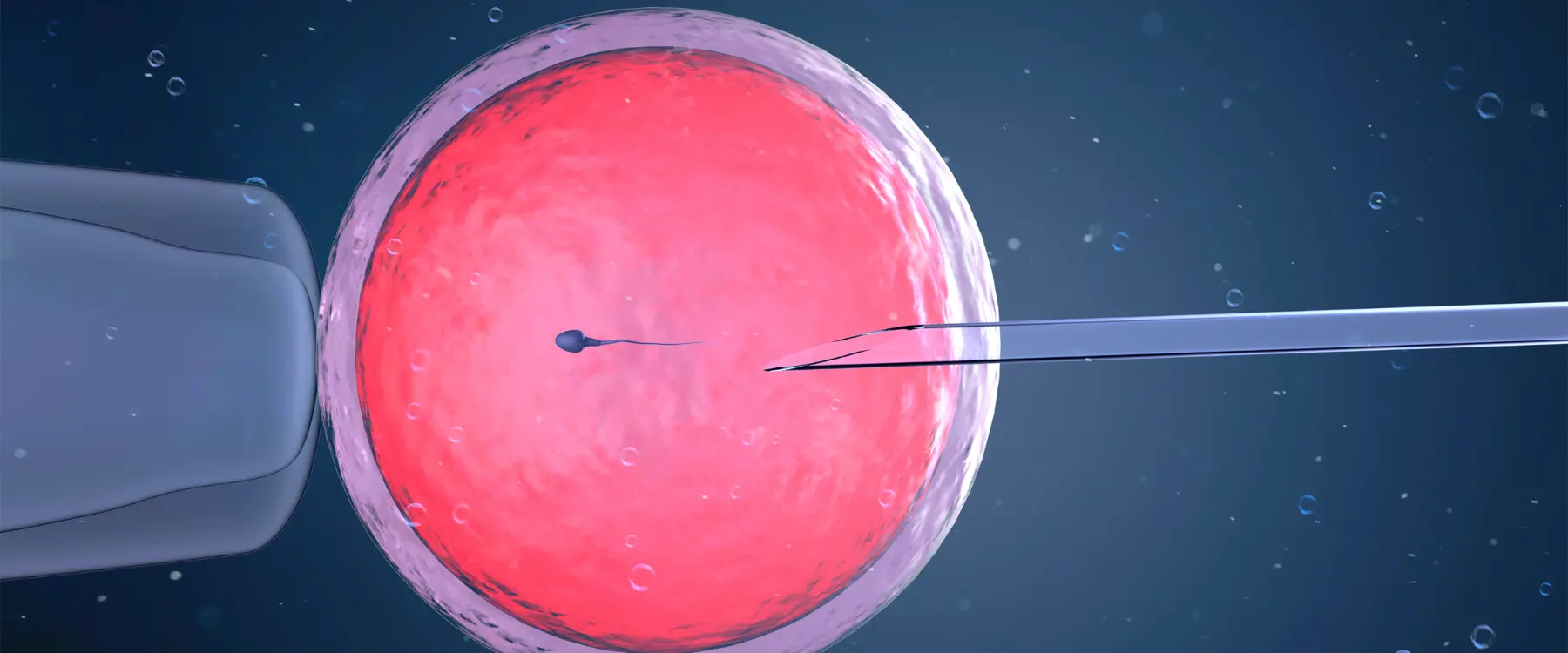
- Intracytoplasmic Sperm Injection (ICSI): this technique is a variant of In Vitro Fertilisation (IVF) and is commonly used in cases of teratozoospermia. It involves directly injecting a selected sperm into an egg. ICSI is useful because a normal-appearing sperm is selected for fertilisation, avoiding the limitations of abnormal morphology.
- In Vitro Fertilisation (IVF): Although IVF itself does not solve the problem of sperm morphology, it can be combined with ICSI to increase the chances of success.
- Advanced Sperm Selection: Techniques such as microfluidic sperm selection or sperm DNA fragmentation can help select sperm with better morphology and less DNA damage for use in IVF or ICSI.
- Preimplantation genetic testing (PGT): In cases of severe teratozoospermia, PGT may be recommended to screen embryos for genetic abnormalities prior to implantation, PGT-A.
Each case of teratozoospermia is unique, and the most appropriate treatment plan will depend on several factors, including the severity of the condition and the overall health of the couple. Therefore, a detailed evaluation by a fertility specialist is important to determine the best treatment strategy.
Causes of Teratozoospermia
Teratozoospermia is associated with genetic factors, chronic diseases, alcohol and drug use, and obesity.
These can be summarised as follows:
- Genetic factors: chromosomal or genetic abnormalities can cause defects in sperm morphology. This may include abnormalities in the sex chromosomes (e.g. Klinefelter’s syndrome) or specific genetic mutations that affect sperm production.
- Testicular injury: Injury to the testicles due to trauma, infection (epididymitis or STIs), previous surgery, radiotherapy or chemotherapy may affect sperm production and result in abnormal sperm forms.
- Exposure to toxins: Exposure to environmental toxins such as industrial chemicals, heavy metals, pesticides, and cigarette smoking can affect sperm production and quality.
- Hormonal factors: Hormonal imbalances, such as abnormal levels of testosterone or other reproductive hormones.
- Excessive heat: Excessive heat in the testicles, whether due to tight clothing, frequent hot baths, or prolonged use of computers on the lap, can negatively affect sperm production and morphology.
- Lifestyle and nutritional factors on fertility: Factors such as obesity, a diet deficient in essential nutrients, excessive alcohol consumption, chronic stress and smoking may contribute to theratozoospermia.
Related articles
- Male infertility and semen pathologies
- Causes of Infertility That Prevent You From Having a Baby
- Everything about ICSI: Differences with IVF, step-by-step process, and success rates
- How to select the best sperm in a fertility treatment
- Age and women’s fertility: Up to what age can I get pregnant?
- IUI vs IVF: Differences between IVF and Artificial Insemination | Vida Fertility
- Pregnancy after vasectomy
Radiofrequency ablation of fibroids can reduce or eliminate uterine fibroids. Find out when it is recommended, how it can help before pregnancy or IVF, and how we assess your case at Vida Fertility.

Getting pregnant through egg donation offers the highest probability for women over 40. We explain the process, donor selection and success rates.
Pregnancy after vasectomy? Yes, it is possible. We explain the chances, reversal, aspiration or testicular biopsy and ICSI. The most important factor: the time since the vasectomy.
Vida Fertility Events
At Vida Fertility, we believe that feeling informed is the first step towards a more confident fertility journey.
Through our events, talks and private consultations, we help patients understand their options, ask questions and receive personalised guidance from our fertility specialists in Spain.
Discover our upcoming events and meet the Vida Fertility team.
Book an appointment
You may also like


Last news


Testimonials









Where can I find Vida Fertility centres in Spain?
📍 C/ Palermo 15, Hortaleza, 28043 Madrid
📞 Phone number: +34 919 29 83 23
🕒 Opening hours: Monday to Friday from 8am to 7pm
📍 Av. Óscar Esplá 1, Bajo, 03008 Alicante
📞 Phone number: +34 919 29 83 23
🕒 Opening hours: Monday to Friday from 8am to 7pm
ℹ️ The information published on Vida Fertility is reviewed by our fertility specialists and medical team, following up-to-date scientific criteria and evidence-based medicine. Our team is a member at scientific societies such as SEF, ESHRE and SEGO.