
 Español
  Français
  Deutsch
  Italiano
  Nederlands
  International
Differences between embryo adoption and double donation by Dr Katharina Spies

At Vida Fertility, every week we welcome women and couples who have come a long way in their quest to have a baby.
Often, when they come to our clinic, they feel that embryo adoption is their only option: a last hope of becoming mothers or fathers thanks to the generosity of other people who have donated their surplus embryos after achieving pregnancy.
It is a real and legal possibility in Spain. However, sometimes it is not the most feasible option, nor the most recommended from a medical and reproductive point of view. That is why today we are talking to Dr Katharina Spies, specialist and medical director of the fertility clinic in Madrid, to explain, in a clear, accessible and professional way, the difference between embryo adoption and double gamete donation, and why, in many cases, the latter can offer better results.


- What is embryo adoption?
- What is double gamete donation?
- Differences between embryo adoption and double gamete donation
- Are you considering double donation or embryo adoption?
- Frequently asked questions about the differences between embryo adoption and double donation
- Our fertility treatments
- Where can I find Vida Fertility centres in Spain?
What is embryo adoption?
Embryo adoption is a fertility treatment in which a woman receives embryos that have been frozen and donated by another couple or woman who has already had children through assisted reproduction.
These surplus embryos, stored in cryopreservation banks, are offered altruistically to people who cannot use their own gametes (eggs and sperm) and wish to start a family. In the UK, this practice is regulated and carried out under medical and ethical criteria.
Advantages of embryo adoption
- Legal, altruistic and accessible option.
- Generally lower cost.
- Does not require ovarian stimulation, but does require endometrial preparation.
- A single embryo is transferred.
Disadvantages of embryo adoption
- Low availability: very few couples donate their embryos.
- No genetic compatibility test can be performed between the recipient and the parents of the embryos.
- The embryos are not usually of the same high quality as those initially selected.
- It is not possible to choose phenotypic characteristics.
What is double gamete donation?
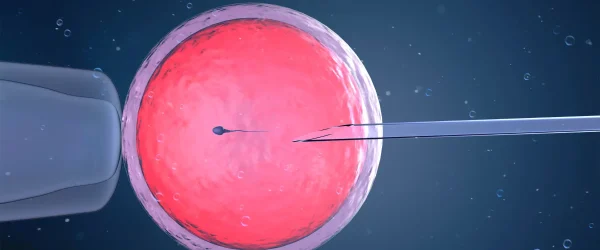
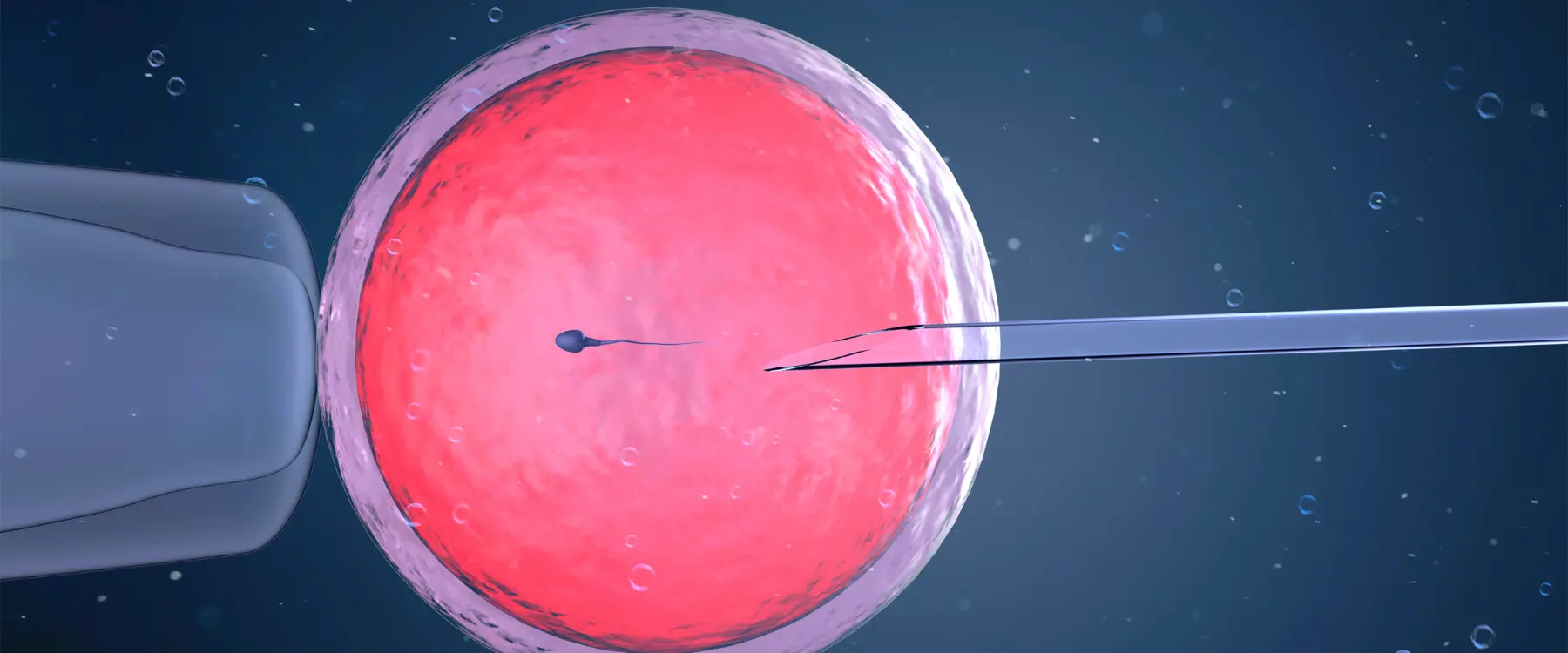
Double gamete donation consists of performing IVF treatment. It should be noted that at Vida Fertility we use the ICSI technique, where we use donor eggs and donor sperm. In other words, new embryos are created from gametes donated especially for you.
In this case, the clinic carefully selects both the egg donor and the sperm donor, based on medical, genetic and phenotypic criteria compatible with you, as established by law and under rigorous protocols of the ESRHE and the SEF.
Advantages of double donation
- Donors pass all the medical tests and checks established by the ESRHE and the SEF.
- Genetic compatibility tests can be performed between donors and recipients.
- High-quality embryos are used, tailor-made for each patient.
- Greater control over treatment planning.
- Higher success rates: embryos in optimal condition, selected and not frozen for years.
- Possibility of phenotypic adaptation to the recipient.
Disadvantages of double donation
- Slightly higher cost than embryo adoption.
Differences between embryo adoption and double gamete donation
| Features | Embryo Adoption | Double Gamete Donation |
|---|---|---|
| Availability | Limited | High |
| Genetic compatibility | Cannot be verified | Genetic compatibility testing |
| Origin of embryos | From other couples | From selected donors |
| Quantity | One available | Depending on the fertilized eggs |
| Control over characteristics | No | Yes |
| Embryo age | Usually cryopreserved | Fresh embryos |
| Success rates | Lower | Higher |
| Cost | Lower | Higher |
We know how important it is for you to feel connected to the process, but it is essential to bear in mind that, as with double donation, embryo donation is completely anonymous. This means that we cannot reveal the identity of the donors, but we can assure you that they have been selected under strict medical criteria to offer you the best chance of fulfilling your dream of becoming a mother.
Which is best for you?
As a gynaecologist specialising in fertility and as a woman who has personally undergone assisted reproduction treatment, I know how difficult it can be to make this decision. There is no single path. But it is important to choose with information, medical support and realism.
At Vida Fertility, when a patient asks us about embryo adoption, we usually explain, based on our experience in consultation, that:
“It is often seen as a supportive and hopeful solution. But it is also important to know that the donated embryos were not selected with you in mind. They were conceived for another couple, with their own challenges. That is why double donation is currently the option that offers the most guarantees.”
In addition, in double donation, our laboratories perform a genetic compatibility test between donors to reduce the risk of disease transmission. The embryos are generated specifically for you, choosing the best possible combinations, increasing the probability of treatment success.
Both embryo adoption and double gamete donation are valid and legal options for starting a family. Neither is better than the other in any way. However, there are differences that are worth knowing about:
- If you are looking for a higher probability of pregnancy, total medical control, and selected embryos, double donation is usually the best option.
- If your financial situation is more limited and you are open to receiving altruistically donated embryos, embryo adoption can be an emotionally beautiful path.
Are you considering double donation or embryo adoption?
At Vida Fertility we can help you. Dr Katharina Spies and our entire medical team are here to guide you, analyse your case, and accompany you step by step on your journey to motherhood.
Book your first consultation with no obligation and discover the most suitable treatment for you. Because your desire to be a mother deserves the best possible plan.
Frequently asked questions about the differences between embryo adoption and double donation
What is the legal process for embryo adoption?
Dr Katharina Spies replies:
In Spain, embryo adoption, also known as embryo donation, is legally regulated by the Assisted Reproduction Law. Unlike traditional adoption, it is not a legal process and does not require the intervention of civil or social authorities.
It is an anonymous and altruistic medical procedure in which a couple or woman who has completed their reproductive project donates cryopreserved embryos to another patient who cannot use their own gametes.
At Vida Fertility, we guarantee that the entire process complies with the ethical, legal and medical requirements established by the SEF (Spanish Fertility Society) and current legislation.
How does double donation work step by step?
Dr Katharina Spies replies:
Double donation is a type of IVF in which we use eggs and sperm from donors who have been carefully selected for the patient.
The process includes:
- Specialists match donors according to the patient’s profile.
- In vitro fertilisation in the laboratory using ICSI, with freshly obtained gametes.
- Development and cultivation of embryos under continuous embryological monitoring.
- Endometrial preparation of the patient for transfer.
- Embryo transfer with the best quality embryo, created especially for her.
This treatment allows for complete control of the process and offers very high success rates.
Which is simpler: embryo adoption or double donation?
Dr Katharina Spies replies:
Both treatments are technically safe and minimally invasive for the patient. However, embryo adoption is slightly simpler because it does not require ovarian stimulation or embryo creation.
On the other hand, double donation, although somewhat more structured and involving more steps, offers a more personalised, controlled treatment with better success rates, as it works with gametes specifically selected for the patient.
Can I choose the embryos or gametes according to characteristics?
Dr Katharina Spies replies:
In embryo adoption, it is not possible to choose the embryos or know the phenotypic or genetic characteristics of the parents, as they were created for another couple and the process is completely anonymous.
In contrast, in double donation, we select egg and sperm donors according to medical, genetic and phenotypic criteria that are compatible with you, ensuring maximum adaptation and control over embryo quality.
Which is more economical?
Dr Katharina Spies replies:
Embryo adoption is usually less expensive, as it does not involve obtaining gametes or fertilisation in the laboratory, and uses embryos that have already been cryopreserved.
Double donation, which requires the synchronisation of two donors and a complete IVF cycle, is more expensive.
However, it is important to consider that the initial investment in double donation can be offset by a higher success rate from the first attempt.
Does social security cover either of these treatments?
Dr Katharina Spies replies:
In general, social security in Spain does not systematically cover embryo adoption or double donation.
Each autonomous community may establish different criteria, and waiting lists and limitations on age or number of attempts further reduce access to these treatments.
For this reason, many patients opt for private clinics such as Vida Fertility, where access is immediate and treatments are tailored to their clinical and reproductive profile.





Ask for a consultation
You may also like


Last news


Testimonials





Where can I find Vida Fertility centres in Spain?

📍 C/ Palermo 15, Hortaleza, 28043 Madrid
📞 Phone number: +34 919 29 83 23
🕒 Opening hours: Monday to Friday from 8am to 7pm
📍 Av. Óscar Esplá 1, Bajo, 03008 Alicante
📞 Phone number: +34 919 29 83 23
🕒 Opening hours: Monday to Friday from 8am to 7pm
ℹ️ The information published on Vida Fertility is reviewed by our fertility specialists and medical team, following up-to-date scientific criteria and evidence-based medicine. Our team is a member at scientific societies such as SEF, ESHRE and SEGO.