
 Español
  Français
  Deutsch
  Italiano
  Nederlands
  International
Eggs for IVF: How many eggs are needed for IVF?

A common question among IVF patients is how many eggs are needed for IVF and whether the number of eggs obtained from the ovarian puncture is sufficient.
Although only one embryo is needed to achieve pregnancy, a larger number of eggs increases the chances of obtaining high quality embryos and thus the possibility of pregnancy. However, the quality of the eggs is as important as their quantity, as having many low-quality or immature eggs is not beneficial.
Let’s start at the beginning:

- How many eggs does a woman have?
- What are antral follicles and how important are they in fertility?
- How many follicles are needed to get pregnant?
- Estimating the number of eggs for IVF
- Egg retrieval: follicular puncture
- How many eggs are needed for successful IVF?
- The importance of egg quality
- Frequently asked questions about the number of oocytes in IVF
- Our fertility treatments
- Where can I find Vida Fertility centres in Spain?
How many eggs does a woman have?
From the moment a girl is born, she has approximately two million eggs in her ovaries. However, this number decreases significantly over time: by the time she reaches puberty and her menstrual cycle begins, around 400,000 eggs remain available.
Throughout her reproductive life, a woman will ovulate between 400 and 500 times at most. During each ovarian cycle, multiple eggs begin to develop, but only one is selected to be released; the rest degenerate and are gradually lost. When this ovarian reserve is depleted, a woman enters menopause, signalling the end of her fertile years.
Besides the quantity, the quality of the eggs also declines over time, which is a crucial factor for fertility. The peak reproductive period is between the ages of 20 and 35, when both the ovarian reserve and the quality of the eggs are at their best. After 35, fertility begins to decline more rapidly, as do the number and quality of eggs, reaching their lowest point at menopause.
What are antral follicles and how important are they in fertility?
Antral follicles are small fluid-filled structures in the ovaries, visible by ultrasound at the beginning of the menstrual cycle. Their number gives an estimate of a woman’s ovarian reserve, an idea of her fertility.
They are important because each one has the potential to develop an egg that could be fertilised. Therefore, a higher number of antral follicles indicates a greater ovarian reserve, which is a positive factor in fertility treatments such as IVF.

How many follicles are needed to get pregnant?
To achieve pregnancy through IVF, there is no specific number of follicles required, as even a single follicle can produce a viable egg for fertilisation.
However, generally, fertility specialists seek to obtain several follicles to increase the chances of success, as not all follicles will produce viable eggs and not all eggs will be successfully fertilised.
The optimal number may vary depending on each woman’s individual circumstances, including her age and ovarian response.
Estimating the number of eggs for IVF
In in vitro fertilisation (IVF) treatments, ovarian stimulation is used to promote the growth of multiple ovarian follicles, as opposed to the single follicle that would develop naturally.
This process increases the chances of collecting several mature eggs, which can improve the chances of success in achieving a pregnancy.
Although there is no specific number of eggs that guarantees pregnancy, factors such as the quality and quantity of eggs collected are crucial.

Results or response to ovarian stimulation
Each woman’s response to ovarian stimulation in IVF-ICSI cycles varies according to factors such as medication and fertility status.
Three groups can be identified:
- Low responders, with a maximum of 3 eggs obtained, usually due to low ovarian reserve.
- Normal responders, with 4-15 eggs obtained.
- Hyper-responders, who can obtain more than 15 eggs, often young women with no fertility problems.
It is crucial to follow up ultrasound and laboratory tests during stimulation to adjust medication according to ovarian response.
What follicular size is ideal for egg collection?
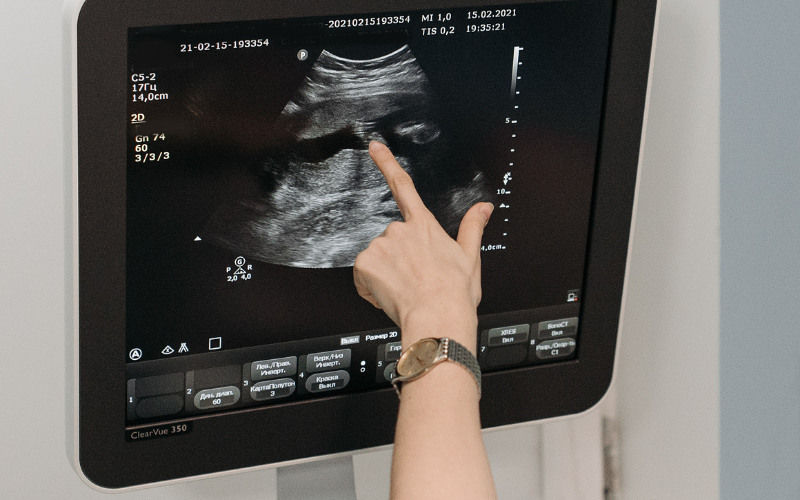
The growth of ovarian follicles is monitored through transvaginal ultrasound by the gynaecologist to determine their maturity. A follicle is considered mature enough to contain an egg ready for fertilisation when it reaches a size of 16-20 mm.
Egg retrieval, or follicular puncture, is then scheduled approximately 34-36 hours later. Thus, follicle size serves as an indicator to predict the number of mature eggs that can be retrieved at the ovarian puncture.
Oestradiol blood levels
It is possible to predict the number of mature follicles from the level of oestradiol measured in a blood test as the amount of oestradiol in the blood can indicate the maturity of the ovarian follicles, with each corresponding to a range of 200-300 pg/ml oestradiol.
For example, an oestradiol level of 3000 pg/ml might suggest that approximately 15 eggs are expected to be retrieved during follicular puncture.

Egg retrieval: follicular puncture
This procedure aims to collect eggs at optimal maturity, suitable for fertilisation.
However, the number of mature eggs retrieved may be lower than expected because not all follicles contain mature or retrievable eggs, directly impacting the chances of successful fertility treatment.
How many eggs are needed for successful IVF?
The number of eggs obtained after IVF is an important factor, but not the only determinant of success. The quality of the eggs is equally crucial and varies according to each woman’s specific situation, including her age and ovarian response.
Ideally, obtaining at least 8 to 15 eggs can increase the chances of success, allowing the best embryos to be selected for transfer. However, success stories can occur even with a smaller number of eggs, emphasising quality over quantity.
A larger number of eggs offers more opportunities to select the best eggs for fertilisation, increasing the chances of achieving a pregnancy. However, even with a smaller number of high-quality eggs, positive results can be achieved.
It is essential to focus on quality and personalised treatment according to the specific needs of each patient.
The importance of egg quality
The quantity of eggs collected in IVF is important, but it is not the only critical factor. Although having more eggs may increase the chances of obtaining quality embryos and thus improve the chances of pregnancy, the quality of the eggs is critical.
It is not beneficial to obtain a high number of eggs if they are not of good quality or maturity. The key is to find a balance between quantity and quality to maximise the chances of successful treatment.
Not all fertilised eggs will progress to the blastocyst stage, so obtaining high quality eggs is critical to increase the chances of reproductive success and allow for future embryo transfers.
Frequently asked questions about the number of oocytes in IVF
How many oocytes are needed for successful IVF?
Dr Katharina Spies answers:
In most cases, obtaining between 8 and 15 mature oocytes offers a good chance of obtaining quality embryos for transfer. However, there is no exact number, as the success rate also depends on the patient’s age, oocyte quality and the technique used.
Of all the eggs retrieved, approximately 60% to 80% reach maturity, and of these, around 70% to 80% are successfully fertilised. Subsequently, about 50% to 60% of the embryos reach the blastocyst stage (day 5 of development), which is the ideal time for transfer to the uterus or cryopreservation.
How many follicles are needed for IVF?
Dr Katharina Spies replies:
There is no exact figure, although having between 6 and 8 follicles is considered a good starting point.
It is important to remember that not all follicles observed before ovarian puncture will produce eggs, and that not all eggs retrieved will be of optimal quality or maturity. For this reason, having a sufficient number of follicles increases the chances of obtaining an adequate number of eggs for treatment.
Age and female fertility are key factors in this process.
I have 5 mature eggs, how many good quality embryos will I get?
Dr Katharina Spies replies:
Generally, 5 mature eggs are considered a low number. However, depending on your age and clinical situation, they could represent a good prognosis.
The most important thing is not so much the number, but the quality of those eggs.
If at least one is of excellent quality and allows an embryo with implantation capacity to develop, the necessary conditions for pregnancy could be achieved. In this context, 5 eggs would be sufficient to achieve the goal: pregnancy.
What is the average number of oocytes per puncture?
Dr Katharina Spies replies:
In controlled ovarian stimulation, the average is usually between 8 and 12 oocytes. This number may be lower in women with low response or higher in patients with polycystic ovary syndrome (PCOS), who tend to produce more follicles.
What is the optimal estradiol level before puncture?
Dr Katharina Spies replies:
Estradiol (E2) is a key ovarian hormone in follicular and endometrial growth. It is a marker that provides information on how ovarian stimulation has progressed, the number of eggs and their maturity. Although it varies from patient to patient, an approximate range of 200 to 300 pg/ml per mature follicle is usually indicative of a good ovarian response.
If you have been trying to conceive for between 6 months and 1 year without success, you can find out more at Vida Fertility. We have the technology, specialists and centres to help you find a solution.


Thinking about becoming a single mother by choice? Read Natalie’s honest IVF testimonial in Spain with donor sperm and discover how Vida Fertility supported her from fear to a positive test.

Becoming a mother at 47 is possible, but it requires options such as IVF or egg donation. Discover real probabilities, treatments and success stories

Considering becoming a single mother at 40? Double donation is the leading treatment. Read a real testimony and discover Vida Fertility’s compassionate, expert care.
Vida Fertility Events
At Vida Fertility, we want to help our patients understand their treatment better.
We are convinced that a fertility process will be better lived, and with more
serenity, if the patient has received all the previous information.
For this reason, we organize events to inform, disseminate and explain how we adapt our processes to each person.
Book an appointment
You may also like




Last news


Testimonials









Where can I find Vida Fertility centres in Spain?
📍 C/ Palermo 15, Hortaleza, 28043 Madrid
📞 Phone number: +34 919 29 83 23
🕒 Opening hours: Monday to Friday from 8am to 7pm
📍 Av. Óscar Esplá 1, Bajo, 03008 Alicante
📞 Phone number: +34 919 29 83 23
🕒 Opening hours: Monday to Friday from 8am to 7pm
ℹ️ The information published on Vida Fertility is reviewed by our fertility specialists and medical team, following up-to-date scientific criteria and evidence-based medicine. Our team is a member at scientific societies such as SEF, ESHRE and SEGO.